

Café · Los Angeles · ⭐ 9.1/10 · 5800 reviews · updated: 2026-08-10 15:37:17
Address: 459 S Hewitt St, Los Angeles, CA 90013, United States
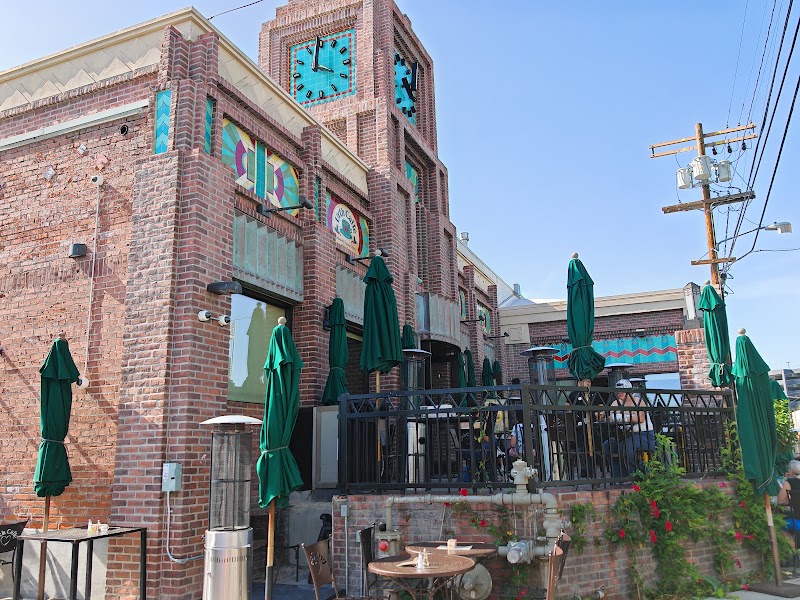
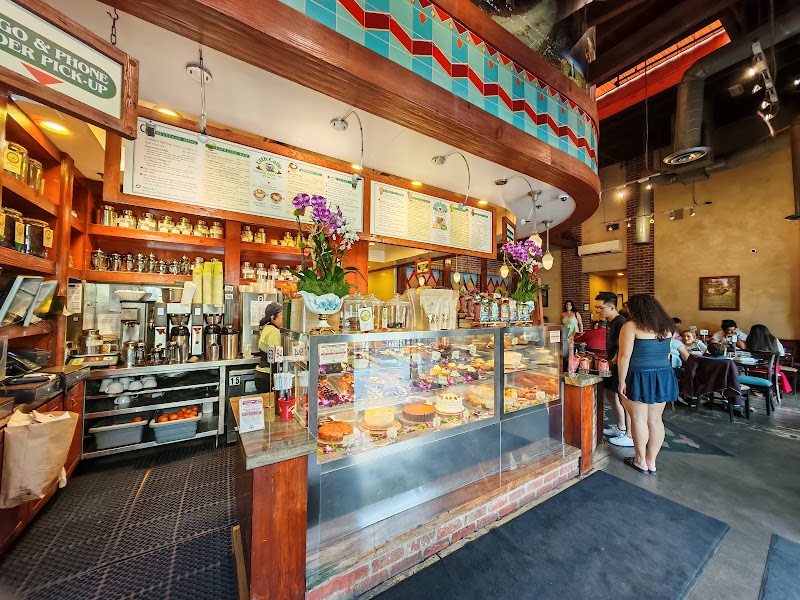
Most Los Angeles cafés are storefronts. This one is a factory. Urth Caffé in the Arts District sits inside a restored egg-products plant from the 1920s, clock tower and all, and the building never stopped being a workplace: behind the dining room are the bakery, the tea blending room and the kitchen the company runs out of this address. You are not dropping into a branch of a coffee brand. You are sitting on its production floor, which is why the pastry in front of you was made about thirty steps away.
Highlights
- A restored 1920s industrial building — a former egg-products factory with a clock tower, Art Deco tile details and a raised outdoor deck that is the best seat in the place whenever the city turns hot.
- America’s first exclusively organic heirloom coffee company — the house has been buying and roasting only certified organic, heirloom-variety coffee since 1989, long before any of that was a marketing category.
- Heirloom trees, grown in deep shade — Typica trees grown high in the Peruvian mountains, plus Bourbon and Geisha lots from other origins, all grown under fruit trees and rainforest canopy rather than in open sun.
- Roasted in small batches on vintage cast-iron German drums — the company kept its old Probat machines rather than moving everything to modern hot-air equipment, and this building has been the heart of that operation for years.
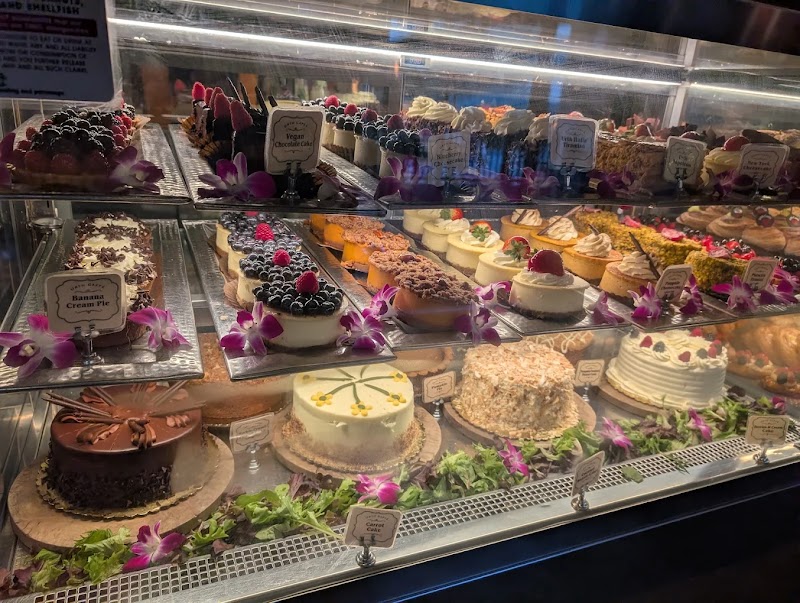
- A working bakery and tea blending room on site — breads, pastries and desserts baked daily, with the house naming imported French butter, organic flour and ancient grains among what goes into them.
- Decaffeinated by the Swiss Water Process — no chemical solvents, which is a small detail that says a lot about how the whole operation thinks.
What’s in the cup
Urth built its entire identity on one idea: heirloom coffee. Heirloom trees are the unmodified descendants of wild rainforest coffee — Typica, Bourbon, Geisha and older regional cultivars. They grow tall, they need genuine shade, and they yield far less fruit per tree than the compact modern hybrids bred for volume and sun tolerance. The house case is that this older genetic material, grown slowly under canopy, gives a cup with more sweetness and noticeably less harsh acidity, and that it is easier on the stomach. Whether or not you accept every claim in that argument, the sourcing behind it is real and verifiable: certified organic with annual third-party inspection, shade-grown under fruit trees, direct relationships with the farms, and a refusal to buy the sun-grown commodity lots that make up most of the world’s coffee.
The origin list moves but has a settled shape. Peru is the founding relationship and still the backbone. Beyond it you will find Guatemalan, Colombian, Honduran, Sumatran and Hawaiian lots, and, when the year allows, a rare Ugandan coffee grown in gorilla habitat. Roasting happens in small batches on cast-iron German drum machines built in the late 1950s and early 1960s — genuinely old equipment, kept because the house believes cast iron holds and delivers heat differently from modern steel. The roast range is honest about itself: a light band aimed at cherry, citrus and honey; a middle band built on chocolate, caramel and spice; and a genuinely dark band for people who still want the older, oakier, licorice-edged style of espresso that Los Angeles drank before the third wave arrived.
What Urth is not is a filter bar. There is no rotating single-origin brew list with a barista walking you through altitude and fermentation, no scale on the counter, no cupping theater. The drinks here are milk drinks, mostly, and the house style suits them: sweet, round, comfortable espresso built to survive a lot of steamed milk and a lot of ice. If you want the modern specialty conversation about processing method and lot separation, the Arts District has other rooms a short walk away and they are on this list too. If you want organic coffee served the way an unhurried European café would serve it, this is the older and more generous address.
Who’s behind it
Jilla and Shallom Berkman were not in the coffee business. In 1989 they were running a small mail-order company selling non-toxic, natural products for the home, and coffee arrived through a side door: they met an organic grower representing a farm in Peru, started looking into how the crop is actually produced, and did not like most of what they found. What followed was several years of learning to roast and brew before they launched what became the first exclusively organic, heirloom coffee company in the country. The name they settled on is a small piece of wordplay — an old root spelling of Earth, joined to the Italian word for coffee.
The first café opened in Manhattan Beach in 1991, the second in West Hollywood in 1994, and the brand grew into the version of a Los Angeles café that visitors picture: patio, big menu, latte art, sunlight. By the middle of the 2000s the central kitchen, bakery and roasting operation near the downtown arena had run out of room, and the couple went looking for industrial space. They found it in the Arts District, in a warehouse that had spent decades as an egg-products plant, and in 2008 opened both a café and the company’s production home in it. That order matters: the production came first, the dining room was built around it.
What it’s for
This is a room for a long, unhurried sit with other people. Brunch with a group of four, a first meeting with someone you do not know well, a birthday that does not want to be a restaurant, a family with a stroller — all of it works here, because the space is large, the ceilings are high and nobody is counting how long your table has been occupied. Bring the person you actually want to talk to; the room’s volume gives you a kind of privacy that a small quiet café never can.
Laptop work is possible but needs honesty. On a weekday mid-morning the Arts District is quiet, the deck is half empty and you can get several hours of real work done with a wall-side table. On a weekend, or during the brunch peak, this is one of the busiest rooms downtown — every table is turning, the noise floor is high, and sitting on a single coffee while people wait for seats is bad manners rather than bad luck. Power is not the reason people come here, so treat a socket as a bonus rather than a plan; arrive charged. Nobody will move you along, but the room itself will tell you when you have outstayed the moment.
The third scenario is the fastest one: coffee and a pastry to carry out. That works at any hour, and it is how a large share of the Arts District’s design studios and lofts use the place — they walk over, collect, and go back to work.
The space
The bones are industrial and were left that way on purpose: warehouse volumes, hard surfaces, tall windows, and the tile and clock-tower details that survived the restoration. The raised outdoor deck is the part most people remember, and in a climate like this one it is the correct answer for most of the year — shaded, elevated above the sidewalk, and open enough that a long lunch out there does not feel like sitting in traffic. Indoors the room is bright and busy; sound carries, and at peak the din is genuine. If you are sensitive to noise, ask for the deck or come outside the middle of the day.
Seating is varied enough that most groups find something: two-tops along the walls, larger tables for groups, and counter space near the front for solo visitors. It is not an intimate café, and it does not try to be. The scale of the building is the whole point.
Beyond coffee
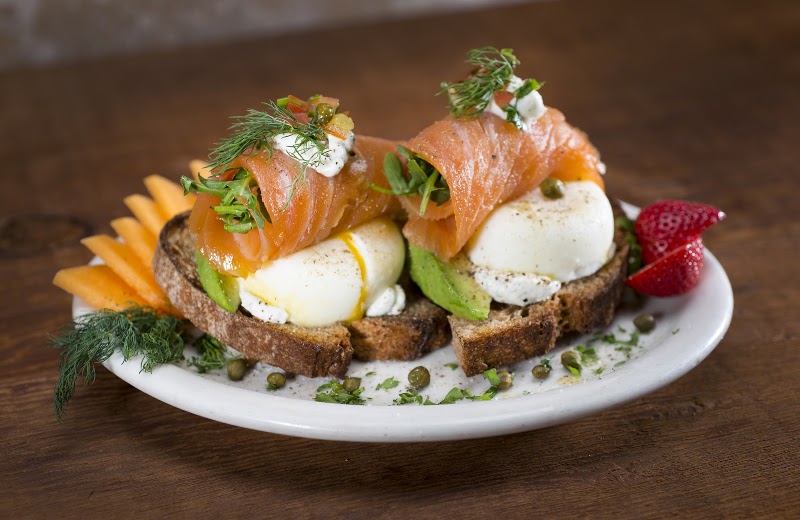
The kitchen is a real kitchen, not a pastry case with ambitions. Breakfast and lunch plates are cooked to order across the day, which is why this reads as a restaurant to some guests and a café to others. The baking is done on the premises every day, and the house lists imported French butter, organic flour, ancient grains and farm eggs among what goes into it — the same sourcing logic as the coffee, applied to flour and butter. Nothing arrives by delivery van from a wholesale bakery.
Tea deserves a line of its own, because it is blended in this building rather than bought in sachets. The matcha programme is treated as a serious drink in its own right, not as a concession to whoever at the table is not drinking coffee, and the tea list is broad enough that a non-coffee visitor has a genuine choice instead of a consolation prize.
When to come
Early is calm. The doors open before the working day starts, and the first stretch belongs to neighbourhood people collecting coffee on the way somewhere. Mid-morning on a weekday is the sweet spot for anyone who wants a table and a conversation. The brunch peak, especially at the weekend, is the opposite experience: full deck, full room, a wait for a table, and a long line at the counter. Late afternoon softens again, and on weekdays the Arts District empties out early, which makes the last part of the day surprisingly pleasant for a quiet coffee.
Seasonally, the deck is the deciding factor. In the hot months it is the only place anyone wants to sit; in the short cool stretch of winter the indoor room comes into its own.
Getting there
The café sits in the Arts District, in the block of converted warehouses east of Little Tokyo and a short distance from the river-side edge of downtown. Coming by rail, the Little Tokyo/Arts District station puts you within a walk of ten to fifteen minutes through the warehouse blocks — a genuinely pleasant walk in daylight and a quiet one after dark. Most people, though, drive: this is the Arts District, the streets are narrow and lined with lofts, and kerb space disappears early. Budget for a paid lot rather than circling, and remember that the surrounding restaurants generate their own parking crush in the evening.
On foot, the district is compact. If you are already downtown you can walk here from Little Tokyo without thinking about it, and once you are in the neighbourhood, several of the city’s best-known coffee rooms are within a few blocks of each other.
Good to know
The menu is large — larger than a specialty coffee bar’s, closer to a full café-restaurant’s — and that breadth is the point rather than a flaw. Come knowing what kind of visit you want and the size stops being intimidating.
Two honest caveats. First, this is a well-known address, which means at peak you are sharing it with visitors as well as locals; if you want the neighbourhood version of the place, come on a weekday. Second, the coffee philosophy here is an older school than the one that dominates the specialty scene now — organic, heirloom, comfort-forward — and a drinker who chases bright, acidic, lightly roasted filter coffee may find the house style rounder and gentler than expected. That is a difference of school, not of quality, and it is worth knowing before you order.
Questions and answers
Does Urth Caffé roast its own coffee?
Yes. The company has roasted its own coffee since the beginning, in small batches on vintage cast-iron German drum machines, and it buys exclusively certified organic heirloom lots. Decaffeinated coffee is processed by the Swiss Water method, with water rather than chemical solvents.
What does heirloom coffee actually mean here?
It means unmodified varieties descended from wild rainforest coffee — Typica, Bourbon, Geisha and older regional cultivars — rather than the compact high-yield hybrids most of the world’s coffee comes from. They need real shade, grow taller and produce less, which is precisely why they are rare.
Is this a good place to work on a laptop?
On a weekday morning, yes: find a wall-side table or a spot on the deck and you will be left alone. At the weekend brunch peak it is a busy, loud room with a queue for tables, and a long solo session is out of place. Arrive with a charged battery rather than counting on a socket.
Is there proper food or only pastry?
There is a full kitchen and cooked breakfast and lunch plates through the day, plus a bakery that works on site every morning. Many people treat it as a restaurant with excellent coffee rather than a café that also feeds you.
What about someone at the table who doesn’t drink coffee?
Tea is blended in this building and treated as a real programme, and matcha is a proper drink here rather than an afterthought. It is one of the better addresses in the city for a mixed table.
Is the outdoor deck worth waiting for?
In warm weather, yes — it is raised above the street, shaded, and considerably calmer than the interior. In the cooler months the indoor room is the better seat.
Can I get here without a car?
Yes. The Little Tokyo/Arts District station leaves you a ten-to-fifteen-minute walk away through the warehouse blocks. By car, plan on a paid lot rather than kerb parking.
Is it suitable for a group or a family?
It is one of the easier rooms downtown for both. The scale of the building means larger tables exist, the deck absorbs groups well, and nobody minds a stroller or a noisy table of six.
How is this different from the specialty roasteries nearby?
Different school. The Arts District’s specialty bars are built around rotating single origins, filter brewing and a conversation about processing. Urth is built around organic sourcing, an in-house bakery and a big comfortable room. Both are worth your time; they are answering different questions.
Opening hours
| Day | Hours |
|---|---|
| Monday | 07:00–22:00 |
| Tuesday | 07:00–22:00 |
| Wednesday | 07:00–22:00 |
| Thursday | 07:00–22:00 |
| Friday | 07:00–23:00 |
| Saturday | 07:00–23:00 |
| Sunday | 07:00–22:00 |
Photos
Visitor reviews
Reviews last updated: 2026-08-10 15:37:17
Data is refreshed monthly. Sources: losangeleska.com and editorial picks based on reviews.
Після невеликої прогулянки я завітав до Urth Caffé в Арт-Кварталі. У місці було людно, але все ж панувала розслаблена атмосфера. Я замовив іспанський лате та сендвіч на сніданок, і обидва були смачними, але без відчуття…
Я обожнюю Urth Caffe; їхні страви корисні, збалансовані та сповнені смаку. Напої завжди смачні, а вода з цитрусовими нотками така освіжаюча. Десерти непогані, але особисто я більше люблю їжу.
Смачний паніні з яєць був чудовим. Саме те, що мені було потрібно, і ситний на кілька годин. Я куштував набагато кращий матча лате, більше б тут його не купив.
Ми віднесли булочки до своїх столів і чекали, поки нам подадуть паніні за номером, який залишився біля нашого столу. Обслуговування було швидким, і паніні принесли приблизно за 10 хвилин. Паніні був гарно підсмажений і х…
Минулої суботи ми з другом вперше відвідали цей заклад. Я замовив тост з авокадо, який не містить білка, і тост для мене занадто товстий. Вони щедро подають авокадо, але для мене це забагато. Я б волів тонший хліб і смач…