

Café · Los Angeles · ⭐ 9.3/10 · 340 reviews · updated: 2026-08-10 15:37:22
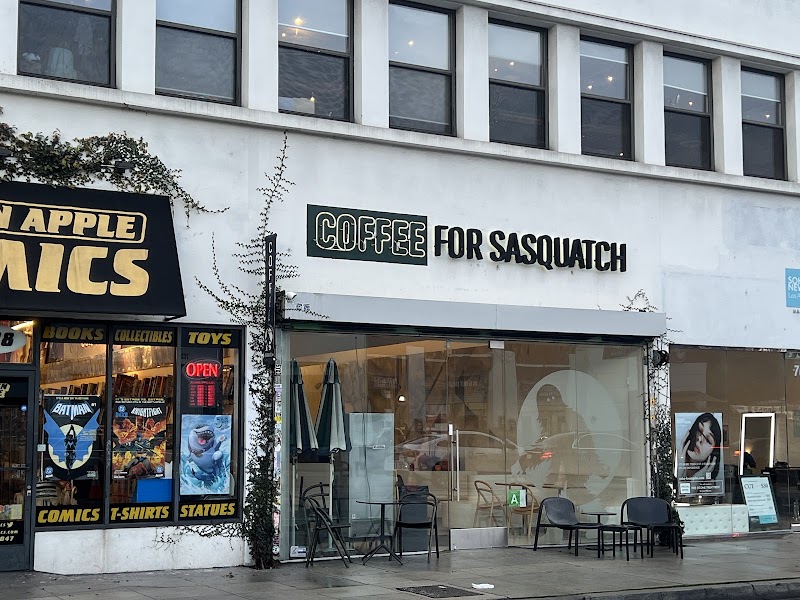
Address: 7020 Melrose Ave, Los Angeles, CA 90038, United States
Naming a café after a creature nobody has ever managed to photograph properly is a joke with a long fuse, and Coffee For Sasquatch has never once explained it. There is no origin story on the website, no myth-making paragraph, no forest-cabin theme inside. What there is instead is one of the most deliberately designed small rooms in Hollywood — a living wall of plants, pale wood, terrazzo benches and daylight — pouring coffee from a San Francisco roastery that helped invent the American specialty scene. The creature is a mascot. Everything else is serious.
Highlights
- Coffee from Ritual, in San Francisco — the anchor roaster is one of the Bay Area houses that built American third-wave coffee, and the café buys rather than roasts, without pretending otherwise.
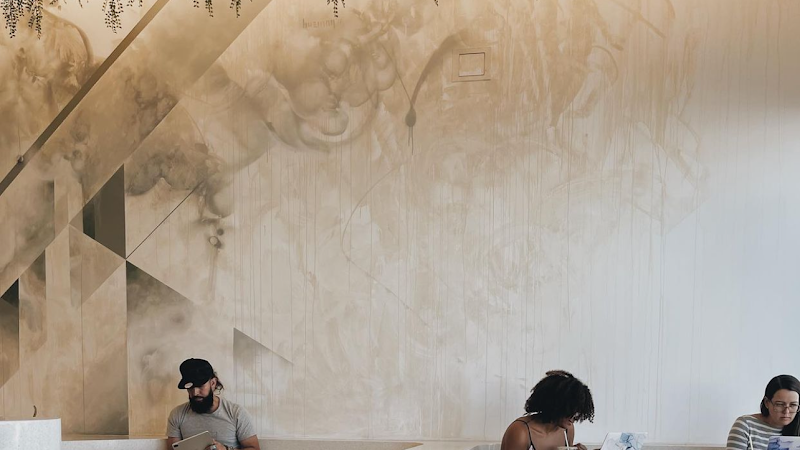
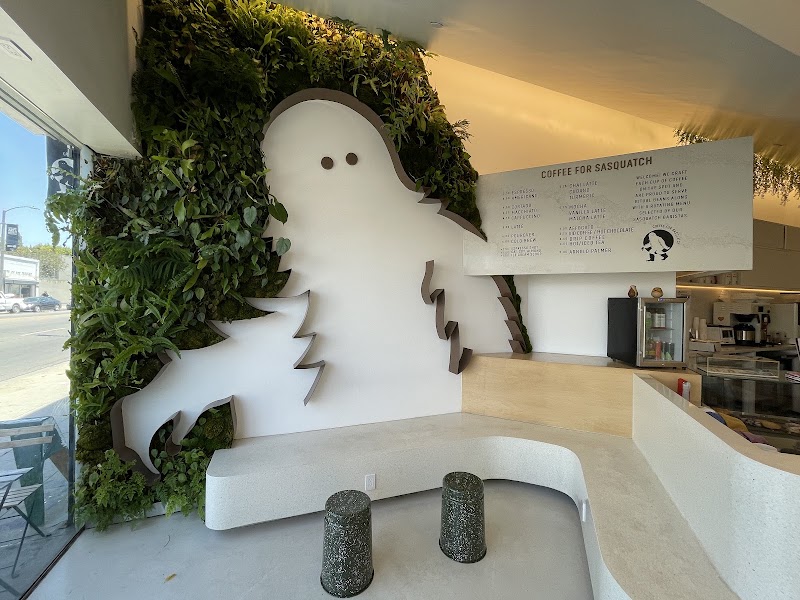
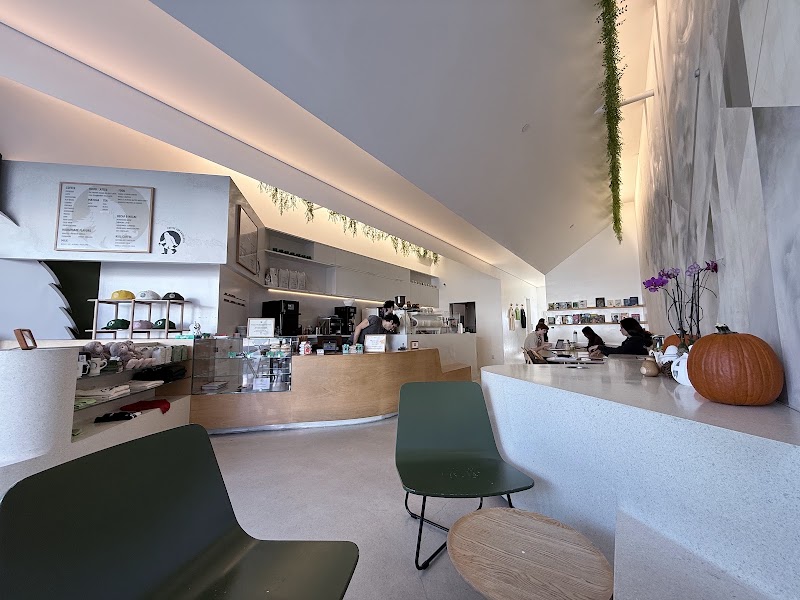
- A room built by an architect before the doors opened — terrazzo benches, pale wood, a large living plant wall and an art installation, designed with a Los Angeles architecture studio rather than assembled from furniture catalogs.
- Founded out of fashion and retail — the founder came from those trades rather than from hospitality, which explains why the space photographs the way it does and why the branding is unusually disciplined.
- It changed hands in 2025 — a regular customer of many years took the business over from the founder after long conversations with her, which is a rare and rather touching way for a café to survive.
- The New York experiment — an outpost opened on the other coast in 2023 and did not last beyond the following year; the original room carried on.
- Designed for two different visits at once — the house describes its own space as made both for meeting people and for getting work done, and the daylight is the reason both work.
What’s in the cup
The anchor roaster here is Ritual Coffee Roasters, from San Francisco — and that single fact tells you most of what you need to know about the style. Ritual is one of the founding houses of American specialty coffee, a Bay Area operation that spent the late 2000s arguing, loudly and in public, that coffee should be traced to a farm, roasted lighter than the American norm and treated as an agricultural product with a season. Buying from them is a position, not a convenience: it puts this café on the bright, origin-forward side of the argument rather than the dark-roast comfort side.
What that means in the cup is a lighter roast profile than the older Los Angeles cafés on this list serve, with more acidity and more fruit in it, and an espresso that keeps its character in milk instead of disappearing under it. If your habit is a dark, oaky, caramelized shot, this will read as sharp on the first sip and then make sense on the third. If you already drink light-roast coffee, this is one of the more reliable addresses in central Hollywood for it.
The café does not roast, has never claimed to, and does not run a rotating single-origin theater with a scale on the counter and a lecture attached. It buys well and it makes drinks properly, which is the honest and much more common version of good specialty coffee. Inventing a roastery story for a shop that has a roaster partner would be a lie, and the house does not tell it.
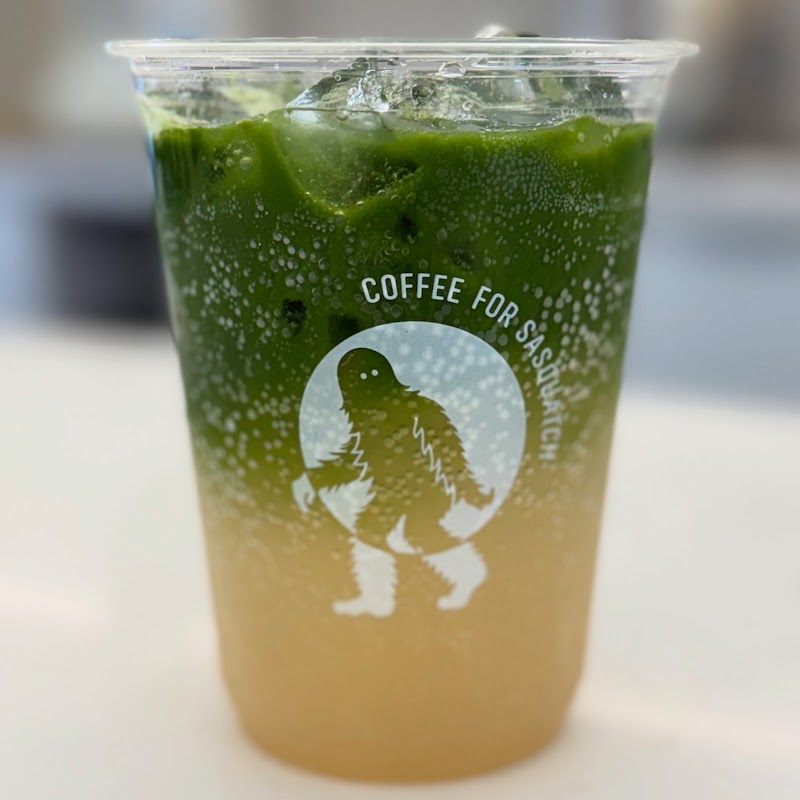
The non-coffee side is genuinely built out rather than tacked on: matcha, chai and turmeric drinks are all part of the standing offer, which matters in a neighborhood where a large part of the daytime crowd does not drink coffee at all. That is a Los Angeles trait, and this café serves it without the faint condescension you sometimes get elsewhere.
Who’s behind it
The café was created by Claire Ackad, an entrepreneur whose background was in fashion and retail rather than in restaurants, and who spent most of a year building the space before opening the doors in the autumn of 2017. That biography explains the room. Somebody who came up through cafés would have optimized the floor plan for throughput; somebody who came up through retail and fashion built a room where the material palette is the point — terrazzo, pale timber, a wall of living plants, an art piece, and light used as a design element rather than as an accident of the windows.
The second chapter is the interesting one. In 2025 the business changed hands, and it did not go to a hospitality group or an investor. It went to Sasha, a customer — a daily coffee drinker who had been coming here for years, who spent hours on the phone with the founder working out whether taking it over was the right thing to do, and who then did it. Cafés usually die at that moment or become something unrecognizable. This one was bought by the person most invested in it staying the same.
There is one other thing worth knowing about the ownership story: the dog. The new owner’s dog was a fixture here as a customer long before the handover, with a corner of the room that everybody knew was hers. That detail says more about the culture of this particular café than any mission statement would.
The brand did try to travel. An outpost opened in New York in 2023 and closed the following year — a short, expensive lesson in how badly a very Los Angeles kind of room translates to a very different city. The original room went on without it.
What it’s for
This is a work café, and unusually for the genre, it is one by design rather than by accident. The house’s own description of the space names two uses in the same breath — meeting people and getting work done — and the room is arranged to allow both: benches along the wall, tables that suit one person with a laptop, and enough daylight that you are not squinting at a screen by mid-afternoon. It is a small room, though, and that is the constraint that governs everything. At a busy hour a laptop occupies a table that four people would like, and the polite calculation is the usual one: work here when it is quiet, and treat a peak-hour table as a short lease.
The second scenario is the meeting, and this is a well-known room for exactly that kind of meeting. The neighborhood is full of small creative businesses, showrooms and production offices, and a design-led café with good light is where a lot of that work gets discussed. It reads as professional without being corporate, which is a difficult register to hit.
The third is the walk-in with a dog, or with a child, or with somebody who does not drink coffee — the café is documented as kid-friendly, dogs are part of its own history, and the matcha and chai are real rather than grudging. In practice this is a good address for the awkward group where nobody wants the same thing.
The fourth is the simplest: coffee to carry away. The corner is on a shopping strip, and a large share of the traffic is people picking up a drink between errands and taking it back out onto the street. Nothing about the room punishes that.
The space
Small, bright and consciously composed. The material story is pale wood and terrazzo, with a large living plant wall providing most of the color and an art installation doing the rest; the light comes in generously, which is the single most important thing about the room and the reason it photographs constantly. It is closer to a gallery-adjacent retail interior than to the warehouse-and-black-steel aesthetic that dominates the eastern side of the city, and the difference is intentional.
The counterpart to that beauty is scale. This is not a large room, and when it fills, it feels full: conversation carries, the queue reaches the door, and a table becomes a genuinely contested resource. The house calls itself a sanctuary from the Los Angeles hustle, and at a quiet hour that is exactly right; at a busy one, it is a small popular café behaving like a small popular café anywhere in the world.
Dogs are part of the culture rather than a tolerated exception — the shop’s own story features one as a longtime regular with her own corner. If you arrive with one, you are not the awkward customer.
Beyond coffee
The food operates on the modern Los Angeles café model: a counter of pastries and light plates to go with the drinks rather than a kitchen sending out cooked breakfasts. The house does not publish a baker or claim to bake on the premises, so the honest description is a pastry counter chosen to sit alongside the coffee rather than a bakery attached to a café. If a full sit-down breakfast is what you want, other addresses on this list are built for it, and this one is not pretending to compete.
Where the offer is genuinely strong is in the drinks that are not coffee. Matcha, chai and turmeric are all standing options rather than afterthoughts, which reflects both the neighborhood and the broader Los Angeles habit of treating the non-coffee drinker as a full customer. For a group where one person is off caffeine, this is a materially better room than most specialty bars.
When to come
Early is the answer if you want the room at its best. The first stretch of the day is when the light is long, the queue is short and the small space feels like the sanctuary the house says it is; it is also the only reliable window for a laptop session with a table to yourself. Mid-morning brings the working crowd and the meetings, and the room tightens.
Weekends are a different proposition entirely. The shopping strip fills, the café fills with it, and the visit becomes a quick drink in a beautiful room rather than an hour of quiet. Late afternoon on a weekday is the underrated hour — the working crowd has thinned, the light is at its warmest, and the room is calm again. Treat this as a daytime café and let the neighborhood’s restaurants take the evening.
Getting there
The café sits in central Hollywood, on the long shopping strip of independent boutiques, showrooms and small studios that runs east to west through the flat blocks below the hills — roughly midway between the Hancock Park neighborhood to the south and Hollywood proper to the north, and not far west of the historic studio lot that anchors this part of town. It is a walking strip once you are on it: the shops on either side are the reason most people are here at all, and the café works as a stop inside a longer errand rather than as a destination you drive to and leave.
Getting to the strip, though, is a car problem, because this is Los Angeles and there is no rail line under this stretch. Buses run along the corridor and are used by locals; everyone else drives or takes a ride. Expect the standard conditions of a popular Hollywood shopping street — metered kerb space along the strip that turns over slowly, permit-restricted residential blocks immediately behind it, and paid lots as the fallback. The practical advice is the same as for every café on this stretch of the city: budget ten minutes for parking, or arrive by ride-hail and remove the problem entirely.
Good to know
Know what this café is before you judge it. It is a small, design-led neighborhood room with a serious roaster partner — not a roastery, not an all-day restaurant, not a laptop warehouse with a hundred seats. Measured against what it is, it is very good. Measured against a flagship roastery, it will feel small, and that is a category error rather than a flaw.
Two honest caveats. First, the size: at peak the room is genuinely crowded, and if a guaranteed table matters to you, the timing advice above is not optional. Second, the café is beautiful and the neighborhood knows it, which means a share of the traffic is there to photograph the plant wall — charming or irritating, depending entirely on your mood that morning.
One thing to appreciate rather than to check: the café is still open because a customer bought it. That is not marketing; it is the actual reason the doors work. Places that survive that way tend to keep the things that made people love them, and this one visibly has.
Questions and answers
Do they roast their own coffee?
No. The anchor roaster is a well-known San Francisco house, and the café is straightforward about buying rather than roasting. Buying well from a serious roastery is a legitimate model and the most common one in good specialty coffee.
Why is it called Coffee For Sasquatch?
The house has never explained it publicly. There is no origin story, no forest theme in the room and no myth-making on the website — the creature functions as a mascot and a piece of branding, and the joke is left dry.
Is it a good place to work on a laptop?
Yes, with a caveat about timing. The space was designed for working as well as for meeting, and the daylight helps enormously, but the room is small — go early or late in the day rather than at the peak, and do not settle in for half a day when people are waiting for tables.
Is the coffee light or dark?
Light, by the standards of the older cafés in this city. The roaster’s whole tradition is origin-forward and brighter than the American mainstream, so expect acidity and fruit rather than caramel and oak.
Is there anything for someone who does not drink coffee?
Yes, and it is properly built out rather than an afterthought — matcha, chai and turmeric drinks are all standing options.
Do they bake on site?
The house does not claim to, and no baker is published. Treat it as a pastry counter that complements the coffee, not as a bakery-café.
Are dogs welcome?
Very much so. The owner’s dog was a regular here for years before the handover and had her own corner of the room, which is about as clear an answer as a café can give.
Has the ownership changed?
Yes, in 2025. The founder handed the business to a long-standing regular customer after a long series of conversations between them. The café continued rather than being reinvented.
Can I get there without a car?
There is no rail station under this stretch of Hollywood, so the realistic options are the bus along the corridor, a ride-hail, or arriving on foot as part of a walk along the shopping strip. Most customers drive, and parking is the main friction of the visit.
Opening hours
| Day | Hours |
|---|---|
| Monday | 07:00–17:00 |
| Tuesday | 07:00–17:00 |
| Wednesday | 07:00–17:00 |
| Thursday | 07:00–17:00 |
| Friday | 07:00–17:00 |
| Saturday | 07:00–17:00 |
| Sunday | 07:00–17:00 |
Photos
Visitor reviews
Reviews last updated: 2026-08-10 15:37:22
Data is refreshed monthly. Sources: losangeleska.com and editorial picks based on reviews.
Яка ж класна кав'ярня. Я заскочила туди після вдалого шопінгу (ой) і була дуже рада знайти безглютенові продукти.
Я замовила холодну каву, яка була чудова, та хрустяче печиво Ube, яке, на щастя, було не надто солодким.…
Супер мила та естетична кав'ярня в Мелроуз! Закохана в просту чорно-білу атмосферу та милий дизайн у стилі Сасквоча. Враження були ще кращими завдяки суперпривітному бариста, який навіть подарував нам один безкоштовний н…
Such a cute coffee shop with beautiful and iconic decorations.
Free and a big parking slot next to the coffee shop. Just inform the valet guy, and it's free for up to 1 hour.
I ordered the vanilla latte and it's not gr…
I really liked the interior and the IP concept, and the space is quite big. But the barista didn’t seem familiar with the coffee combinations and couldn’t really explain them. Most importantly, the matcha was also very w…
Коли я вперше відвідав це місце, мені дуже сподобалася концепція Сквоча. Ми з дідусем були одержимі Сасквочем, тому здавалося, що він досі тут зі мною.
Я ОБОЖНЮЮ атмосферу та саму ідею втілити Сасквоч у життя.
Дуже розч…