

Café · Los Angeles · ⭐ 9.5/10 · 450 reviews · updated: 2026-08-10 15:37:21
Address: 1865 S Mansfield Ave, Los Angeles, CA 90019, United States
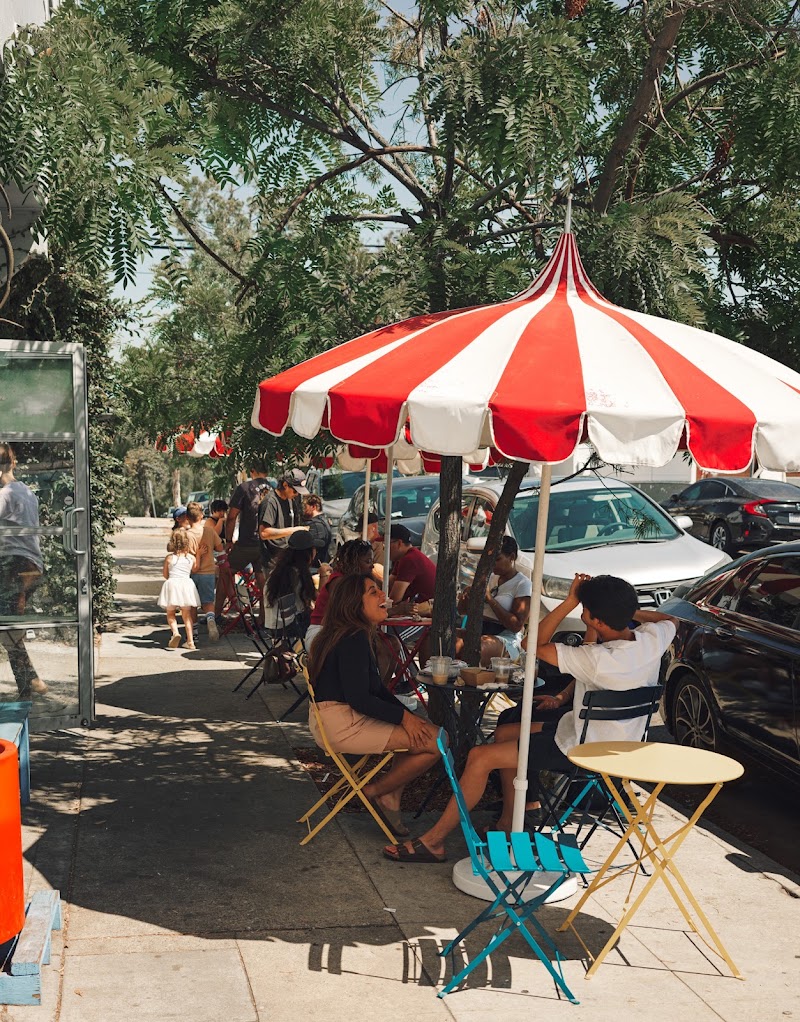
Most cafés tell you what they are within a step of the door. Jurassic Magic Coffee makes you walk to the back first. The front of the Mid-City room is a high-ceilinged industrial shell with corrugated glass overhead and shaded tables outside — pleasant, unremarkable, the sort of place you would assess in five seconds and leave. Then you keep going, and there is a garden behind it, half indoors and half not, with power outlets, small tables, a wall of tropical plants and racks of records for sale. That hidden second half is the reason people who work for themselves in this part of Los Angeles talk about this place the way they do.
Highlights
- A hidden garden patio at the back — the flagship’s real room is behind the counter area: an indoor-outdoor space with a wall of tropical planting that most first-time visitors do not know exists.
- Outlets and small tables where you actually want them — the back area was set up for people who came to get something done, which in a car-shaped city is a rarer amenity than it sounds.
- A rotating cast of roasters — the drip changes with partner roasteries rather than committing to one house profile, so the filter is a different coffee on different visits.
- Part café, part shop — the back doubles as retail, with vinyl and hand-woven bags on the shelves alongside the coffee, which is why the space reads as an evolving installation rather than a fixed fit-out.
- A sandwich shop immediately next door — a separate business shares the address, which turns a coffee stop into breakfast without anyone having to build a kitchen.
- Open every day of the year — the flagship keeps its doors open all 365, holidays included, which in this neighborhood is a genuine service.
What’s in the cup
The filter side of Jurassic Magic is built on rotation rather than on a single house profile. The café works with partner roasteries and cycles through them, which is a deliberate position rather than a stopgap: the drip on the board changes as the partners change, and a regular who comes weekly is not drinking the same coffee every week. That model asks more of the staff than a single-roaster bar does, because every rotation means relearning how a coffee behaves, and it asks more of the customer too — you have to be willing to be surprised.
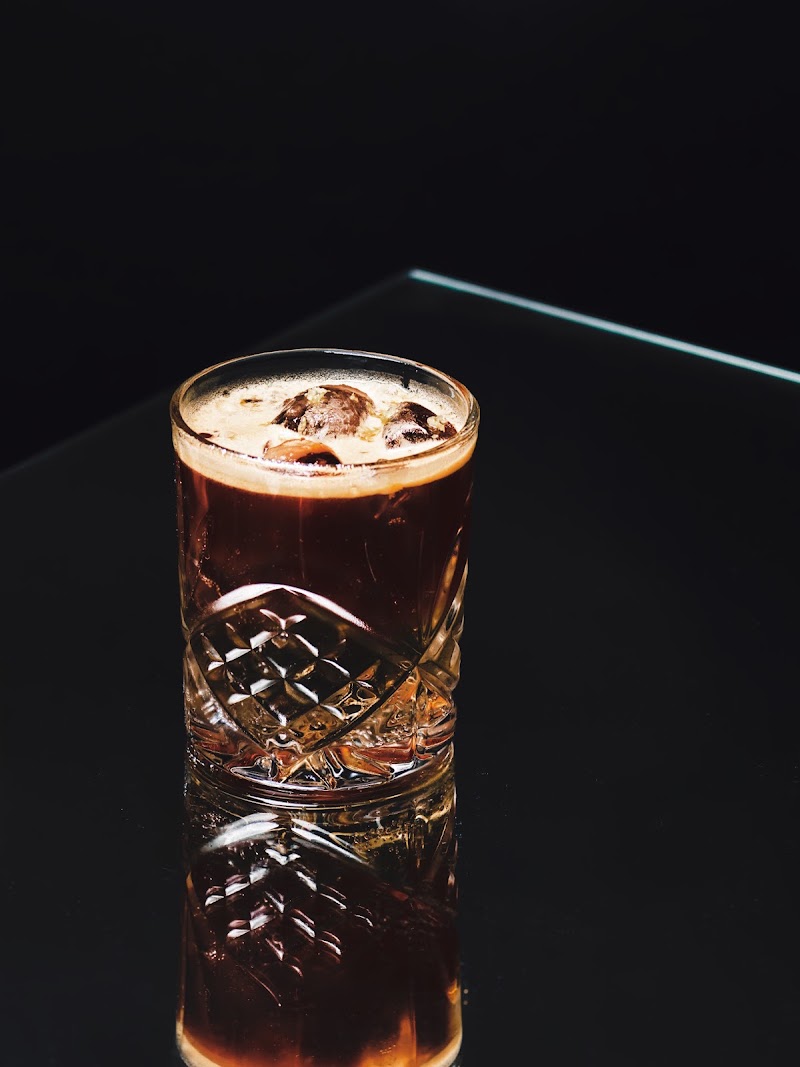
The house side of the menu goes the other way and is entirely fixed. The signature drinks are built around spice and syrup rather than origin: a house latte carrying the café’s own spice blend, a cold brew lengthened with mint and agave, a cappuccino leaning on maple and cinnamon. This is not the vocabulary of a competition bar, and it is not meant to be. It is the vocabulary of a neighborhood room that expects most of its customers to order the same thing every day and wants that thing to be memorable. Matcha and tea are treated as real parts of the board rather than as concessions.
What the café says about itself is worth taking at face value, because it explains the split. The founders describe the business as having started from a feeling rather than a business plan, and describe the ritual of coffee as a form of storytelling. In practice that means the rotating filter is where the craft argument lives and the signature drinks are where the personality lives, and neither is asked to do the other’s job.
Who’s behind it
This is the honest gap. Jurassic Magic publishes a philosophy but not a founding story: there is no named founder on the company’s own pages, no stated opening year, and no published explanation of where the name came from. What can be established is that this is an independent local business rather than a franchise, that the Mid-City room is the flagship and came first, and that it has since been joined by a second café near MacArthur Park with a communal walnut bar.
The company describes its rooms as evolving installations that are meant to breathe rather than to be finished, and it puts real weight on events, pop-ups and collaborations with people from the city’s music and art scenes. That is a clearer statement of intent than most founder profiles manage, and it is what a visitor actually encounters. Whoever is behind it has decided the café should be judged on the room and the programming rather than on a personal legend, and this description follows that lead rather than inventing one.
What it’s for
This is a working café, and unusually honest about it. The back area was built with outlets, small tables and a soothing green wall, and the people who use it are freelancers, students and writers who need somewhere that is not their apartment. Nobody is timing you. If your visit involves a laptop and a few hours, this is one of the better answers on this side of the city, and it is the single most useful thing to know before you come.
It works just as well as a conversational room, and the geography does the sorting for you. The shaded tables out front are for a quick catch-up, a phone call, a coffee with someone you will see again next week. The garden at the back is where a longer, quieter conversation belongs. The two zones behave like different cafés under one name, and choosing correctly on arrival is most of the experience.
For the takeaway version, the counter is quick and the location is a natural pause on a drive across Mid-City. And for a solo visit with no agenda — a record you did not intend to buy, half an hour in the plants, a drink you finish slowly — the back room is the point. The retail shelves give a solitary visit something to do, which is a small thing that a lot of cafés forget to provide.
The space
The flagship is a converted industrial building, and the conversion has been left legible: high ceilings, concrete, oak, corrugated glass that turns the hard Los Angeles sun into the soft, even light the city is quietly famous for. Seating is generous by the standards of specialty cafés — this is not a room where you circle hoping somebody stands up — and it is spread across three distinct settings: the shaded tables outside at the front, the main room, and the garden behind.
The garden is the part worth planning around. It is genuinely half outdoor, screened by tropical planting, and it functions as the quiet end of the building. It is also the retail end, so you are sitting among things that are for sale, which sounds like a distraction and in practice is the opposite: it gives the room the texture of a shop you like rather than the blankness of a café you tolerate.
Noise is moderate and social rather than industrial. The company runs events and pop-ups, so there are evenings and weekends when the room is doing something other than serving coffee quietly — worth knowing if a guaranteed silent table is the requirement. On an ordinary weekday the back is calm enough for calls.
Beyond coffee
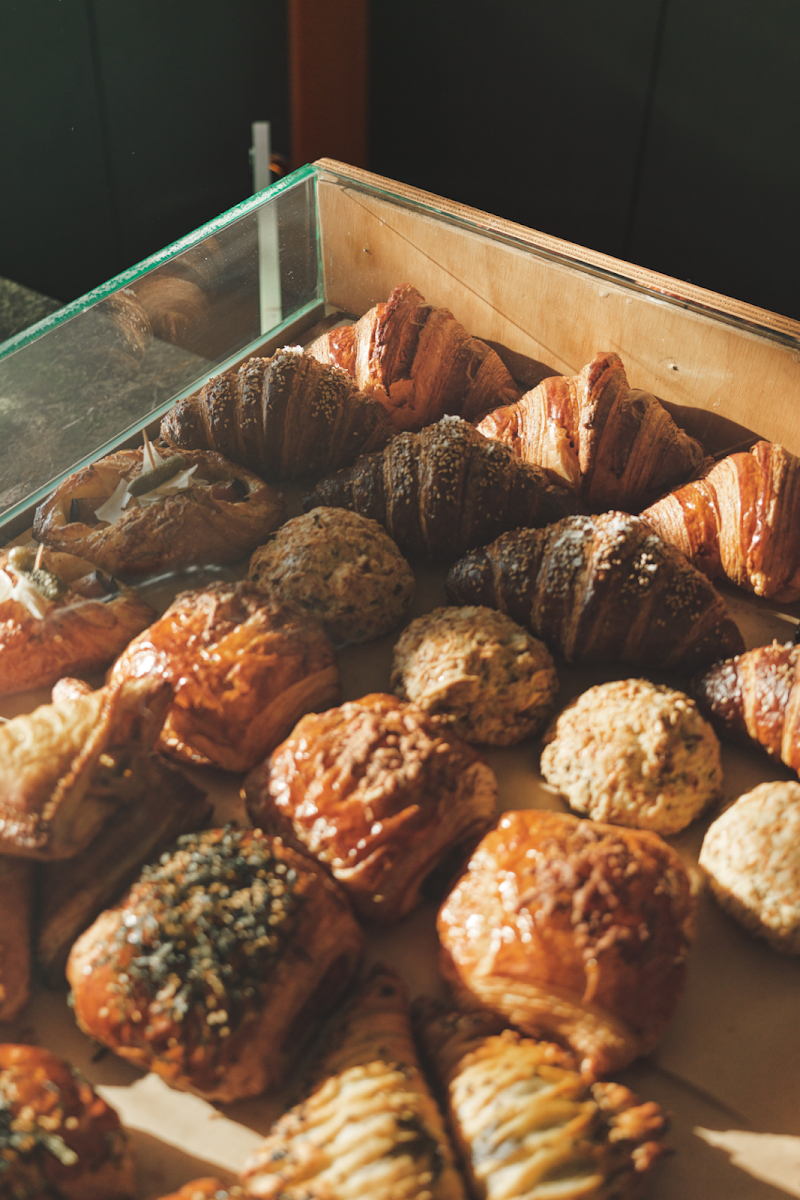
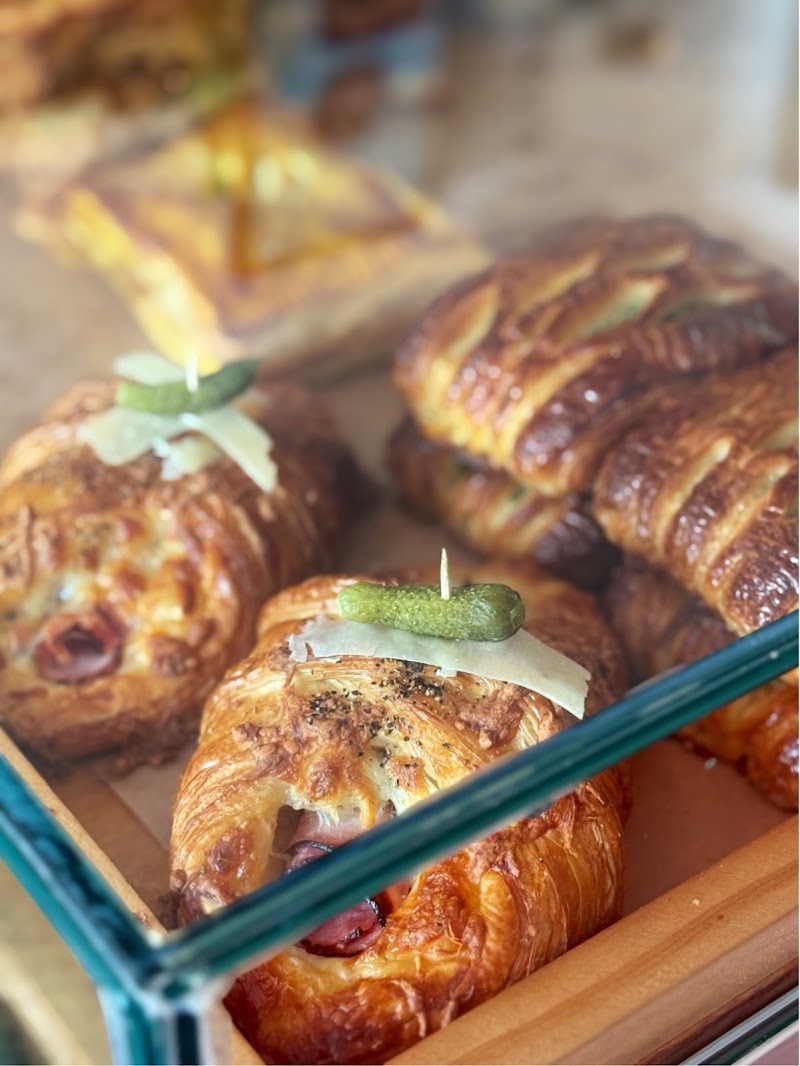
The café itself keeps food modest: fresh pastries and light things to go with a drink, no kitchen of its own, no brunch service. What makes this work is the arrangement next door. A separate sandwich shop operates at the same address, handling breakfast burritos and sandwiches, which means the two businesses together cover a proper morning without either of them pretending to be a restaurant. Bring the food to the coffee, or the other way round; nobody minds.
The retail shelf is the other half of the offer and is more interesting than the pastry case. Records, hand-woven bags and rotating stock from local makers sit in the back room, and the mix changes. It is a small, coherent expression of the company’s stated idea that the café is part coffee bar and part cultural experiment, and it is the reason a visit here can last longer than the drink does.
When to come
The doors open before the working day and the café closes in the afternoon rather than the evening — this is a daytime room, and turning up hoping for an after-dinner coffee will not work except on event days. The busiest stretches are the weekday morning and the weekend late morning, when the front tables fill first and the back garden fills second.
The productive window for anyone bringing a laptop is the middle of a weekday, when the morning rush has cleared and the back is at its calmest. If you want the garden to yourself, that is when to arrive. And because the flagship stays open every day of the year, it is also the reliable answer on public holidays, when much of Mid-City shuts and the alternatives evaporate.
Getting there
The café sits in Mid-City, on a quiet block in the pocket where the district’s light-industrial buildings meet its residential streets — south of the Miracle Mile museums, east of the approach to Culver City, and far enough off the big commercial boulevards that the block itself is calm. This is a drive-to café in a drive-everywhere city, and the neighborhood is not one that visitors stumble into by accident.
The good news is that parking here is genuinely easier than at most Los Angeles cafés with this kind of reputation: street parking on the surrounding residential blocks is usually findable, with the usual caution about posted restrictions, and the peak hours are the only real problem. The café itself suggests arriving by bike or scooter, which in this flat part of the city is realistic. Public transport is the weak link — there is no rail stop within a comfortable walk, the nearest light-rail line runs well to the south, and the practical options are the bus routes along the large east–west corridors nearby. Most people drive, and should plan on it.
Good to know
Set expectations correctly in two directions. First, the front of the café is not the café — if you judge the place from the doorway you will miss the garden entirely, and the garden is why people come back. Second, this is a rotating-roaster bar, so the filter you loved last month may not be there this month; if consistency matters more to you than discovery, order from the fixed signature side of the menu instead.
Practical notes: the outlets in the back are the scarce resource at busy hours, so arrive early if a full battery matters. The retail stock changes, so if something on the shelf appeals, it will probably not be there next time. And because the neighboring sandwich shop is a separate business, plan on two transactions rather than one bill.
Questions and answers
Does Jurassic Magic roast its own coffee?
No. The café works with partner roasteries and rotates them, so the drip changes between visits.
Who founded it and when did it open?
The company does not publish either. There is no named founder and no stated opening year on its own pages, and no reliable source establishes them — what is clear is that this is an independent local business and that the Mid-City room is the original.
Is it good for working on a laptop?
Yes, and it is one of the better options in this part of the city. The back area has outlets, small tables and a green wall, and it was set up for exactly that.
What is the hidden garden?
An indoor-outdoor space behind the main room, screened by tropical planting, which doubles as the café’s retail shop. Most first-time visitors do not realize it is there.
Is there food?
The café serves pastries and light things only. A separate sandwich shop next door at the same address handles breakfast burritos and sandwiches, so a full breakfast is possible across the two.
How many locations are there?
Two in Los Angeles: this Mid-City flagship and a second café near MacArthur Park, which has a communal walnut bar.
Is it open on holidays?
Yes. The flagship is open every day of the year, which makes it a dependable option when most of the neighborhood is closed.
What should I order if I want the house style?
The signature side of the menu: the spiced house latte, the mint-and-agave cold brew, or the maple-and-cinnamon cappuccino. For the craft side, ask what is on the rotating filter.
Is parking difficult?
Less than you would expect. Street parking on the surrounding blocks is usually available outside peak hours; check the posted restrictions, and consider a bike, since the area is flat.
Opening hours
| Day | Hours |
|---|---|
| Monday | 07:00–16:00 |
| Tuesday | 07:00–16:00 |
| Wednesday | 07:00–16:00 |
| Thursday | 07:00–16:00 |
| Friday | 07:00–16:00 |
| Saturday | 07:00–16:00 |
| Sunday | 07:00–16:00 |
Photos
Visitor reviews
Reviews last updated: 2026-08-10 15:37:21
Data is refreshed monthly. Sources: losangeleska.com and editorial picks based on reviews.
Це моя улюблена кав'ярня в цьому районі. Кава досить смачна. Я завжди замовляю тут каву в крапельному вигляді, і вона постійно смачна. Я трохи сноб до кави, я щоранку готую аеропрес, тому повірте мені, коли я кажу, що ка…
«Магія Юрського періоду» – це, безумовно, одна з найкрутіших знахідок у Лос-Анджелесі. Назва звучить як сувенірна крамниця тематичного парку, але насправді це неймовірно спокійний, мистецький заповідник. Я провела день н…
Хотів відвідати цю кав'ярню, про яку я чув. Це чарівна кав'ярня в облагородженому районі на розі Менсфілда та Вашингтон-бульвару. Симпатична, але важко виправдати ціни – маленький особливий лате, який я замовив, коштував…
Stopped by Jurassic Magic for a cortado. The drink looked Solid at first, but it didn’t quite come together the way I hoped. The flavor was decent and enjoyable enough, but the biggest issue was the texture. It had a cha…
Місце дуже естетичне, але кава здавалася низько-посередньою. Можливо, це був мій вибір (я замовив Magic Latter).
Тут є багато столів і стільців, як всередині, так і зовні, тому це ідеальний варіант, якщо ви хочете там п…