

Editor of American Vogue in the 1960s, style icon, Hollywood screenwriter and talented writer—all this is about the incredible Joan Didion. She is known for her journalistic articles, non-fiction and literary works that are written in an edgy style. Also learn about one of the most influential women in LA, Dorothy Buffum Chandler. Read more on losangeleska.
Biography
Joan was born on December 5, 1934, in Sacramento, California. In 1956, she graduated from the University of California, Berkeley. After graduation, the woman worked for Vogue. As a teenager, Joan wanted to become an actress, but the talent agency told her that she was not tall enough for this profession. So instead, the woman became a writer, gaining fame as the author of several novels and numerous essays with elements of self-dramatization.
Her works have been part of the US cultural movement for the past half century. But at the beginning of her career, things were not so easy. At Vogue’s editorial office, the author was forced to rewrite her texts dozens of times. A lot of information was thrown out of her articles. So with such working conditions, Didion did not work at the magazine for very long. After leaving Vogue, Didion set off on her own path. The woman published five novels and a dozen nonfiction books.
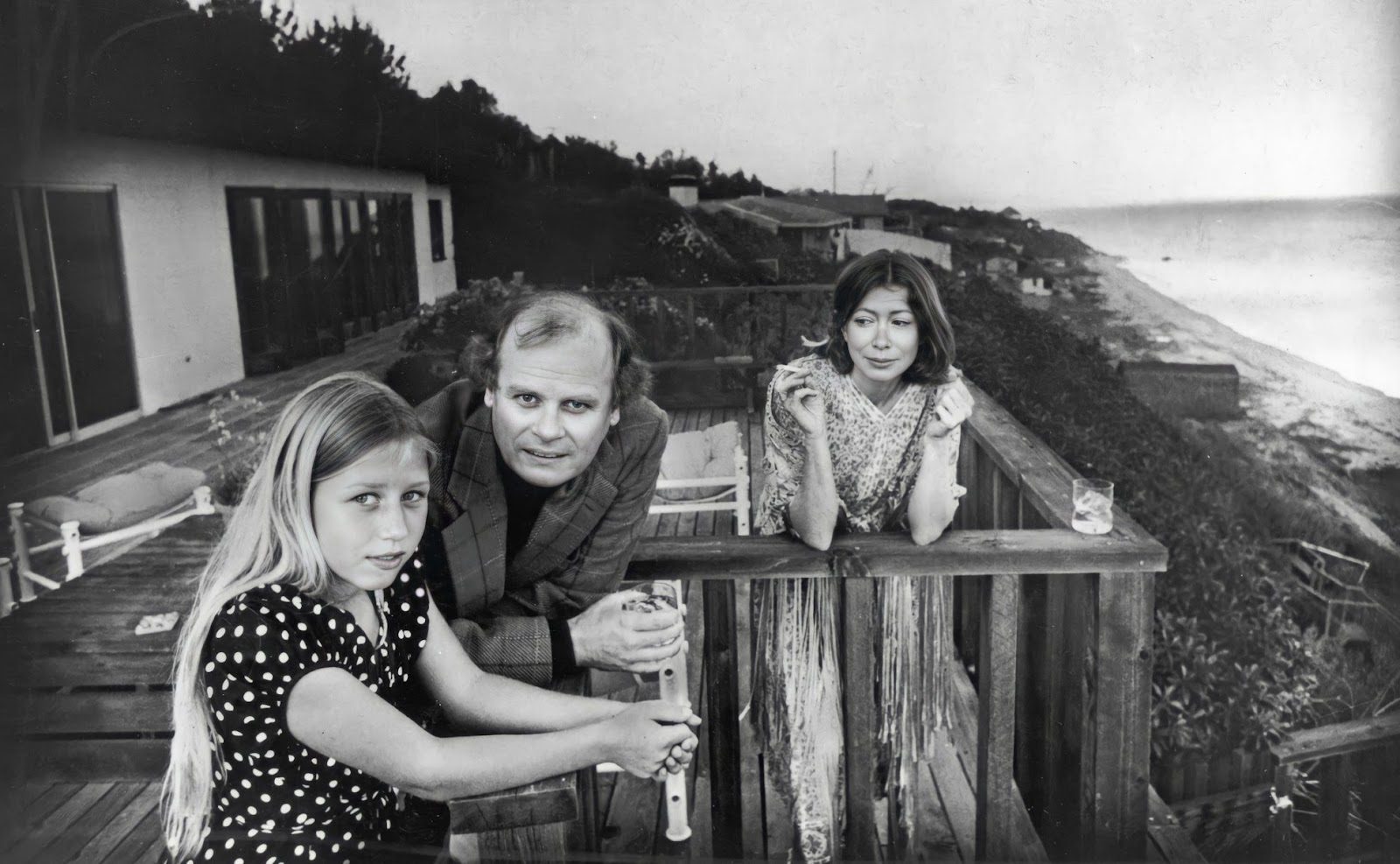
Together with her husband, the writer John Dunne, she created several dozen scripts for Hollywood films. During this time, she wrote the novel Run, River, which was published in 1963. It received positive reviews from readers. At that time, she met the writer J. G. Dunne, who became her husband. They returned to California in 1964.
The couple drank a lot of alcohol, smoked and had fun. They also traveled a lot. They left their adopted daughter, Quintana, with Didion’s mother, at her home in Sacramento. Quintana, not surprisingly, was a troubled child. She also drank heavily and often used drugs. The writer’s daughter died at the age of 39 from septic shock after numerous hospitalizations. The writer passed away at the age of 87. The Knopf publishing house reported that the cause of death was Parkinson’s disease.
Creative path of the writer
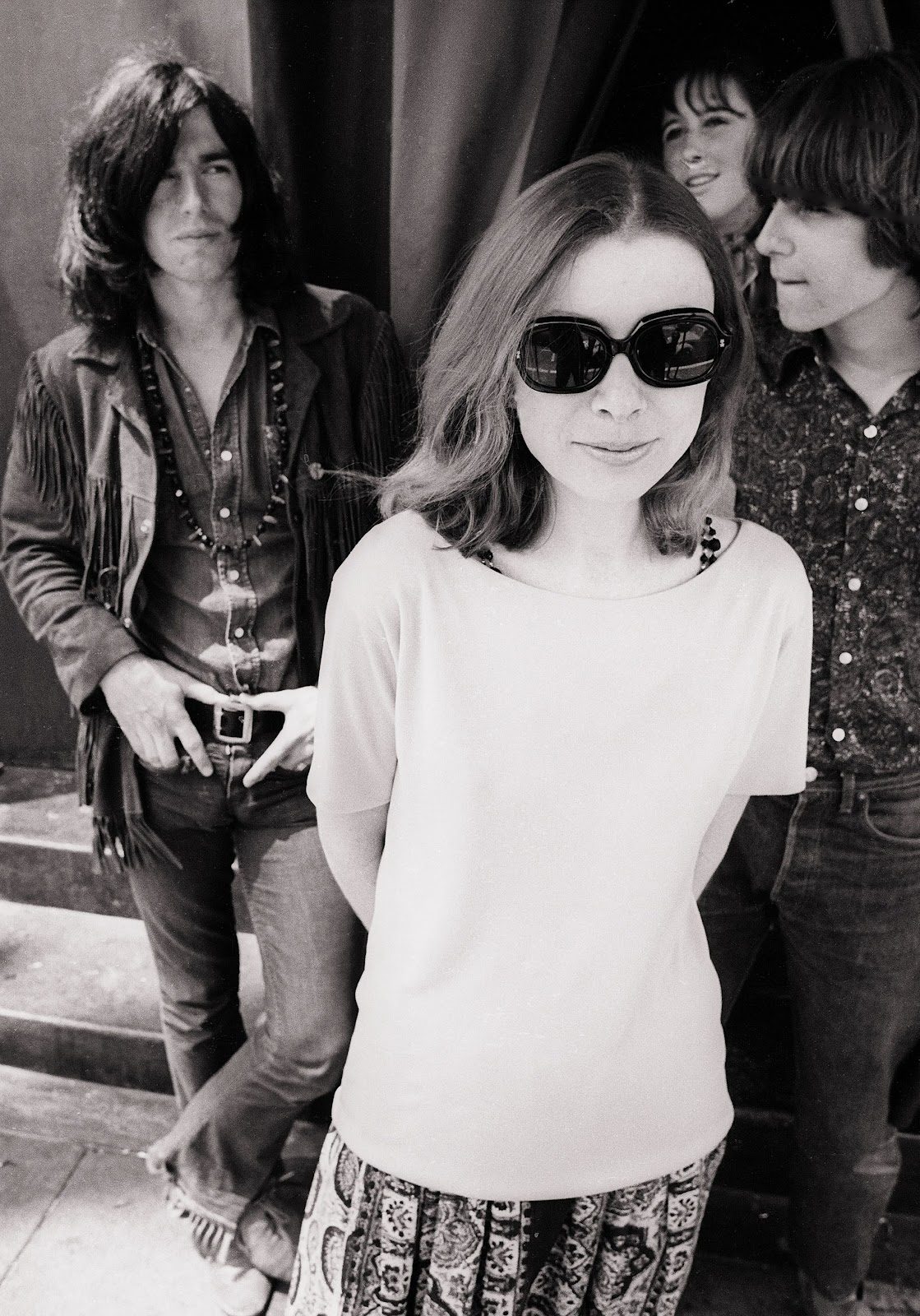
Didion became known for a series of incisive, searching articles in Life magazine and The Saturday Evening Post that explored the limits of postwar American life. California, her home state, provided her with the richest material. In 1970, Didion published her novel Play It as It Lays. Its heroine seeks to find meaning in a meaningless world. The theme of the disintegration of society was continued in A Book of Common Prayer. As ties break down, the heroine Charlotte Douglas seeks salvation in a fictional Central American country.
The second collection of essays was published in 1972 under the title The White Album. The collection was named in memory of the famous Beatles album, which captured all the turmoil of the 1960s. In 1984, she published her novel Democracy.
After a twelve-year hiatus, Didion returned to prose with The Last Thing He Wanted. Set in 1984, the year Democracy was published, the novel bears some similarities to that novel, but is transferred to another outpost of American foreign policy games, Central America. The book’s protagonist, Elena, finds herself involved in political intrigue and conspiracy, starting with the assassination of President Kennedy and ending with the scandalous Iran–Contra affair.
Co-writing with J. G. Dunne, Didion wrote the screenplays The Panic in Needle Park, Play It as It Lays, based on her novel, and, in collaboration with other authors, A Star Is Born, True Confessions and Up Close & Personal. In 1996, she received the Edward MacDowell Medal.
The Year of Magical Thinking
In 2005, Joan published The Year of Magical Thinking, which won the National Book Award, was named one of Time magazine’s 100 Best Nonfiction Books of All Time and was nominated for the Pulitzer Prize. She began writing this book in May 2004, four months after her husband fell in the living room of their apartment and died of a heart attack. It was December 30, 2003. An hour before, the couple had returned home from the hospital: their 38-year-old daughter, Quintana, was in a coma. She had fallen into a coma due to septic shock caused by pneumonia. So The Year of Magical Thinking is about how to survive grief.
The book Blue Nights was published in 2011 and tells the story of how the writer experienced another grief: a year and a half after her husband’s death, her daughter Quintana died, after suffering a cerebral hemorrhage after her father’s funeral. She was 39 years old. In 2013, President Barack Obama awarded J. Didion the National Humanities Medal. In 2007, the woman received the Medal for Distinguished Contribution to American Letters. She was a member of the American Academy of Arts and Letters, the American Academy of Arts and Sciences and The Berkeley Fellows. The author received an honorary doctor of letters from Harvard University in 2009 and an honorary degree from Yale University in 2011.
In 2019, the Library of America began republishing all of Didion’s novels and books of essays in a collected edition. Two volumes of her works appeared in 2021. J. Didion devoted her life to noticing what other people prefer not to see. Over the past half century, she had explored the various absurdities of contemporary American life.