

In the modern world, where fashion is changeable, there are names that are impossible to forget. American costume designer Edith Claire Head is an example of just such a figure. She was a true creator of Hollywood style, whose sketches transformed screen stars into eternal fashion icons. More about her life, unique creative method, most famous works, and legacy will be told by losangeleska.
The Birth of a Legend
Edith Claire Posener (Edith Claire Posener, maiden name), and then Edith Head (Head, the surname of her first husband) was born in 1897 in San Bernardino, California, into a Jewish family. Her parents divorced, and in 1905, her mother Anna remarried. The family moved often.
In 1919, Edith earned a Bachelor of Arts degree with honors in French from the University of California, Berkeley. A year later, she received a Master of Arts degree in Romance Languages from Stanford University.
After completing her studies, she taught French at the Bishop’s School in La Jolla, San Diego. A year later, she taught Spanish at the Hollywood School for Girls (now the Hollywood Woman’s Club, also known as the Hollywood Club of Los Angeles).
She sought to receive a higher salary, so she asked the management to teach art. To improve her drawing skills, she attended evening classes at the Otis College of Art and Design (a private school of art and design in Los Angeles) and the Chouinard Art Institute (a professional art school in Los Angeles).
In 1923, she married Charles Head. The couple divorced in 1938 after several years of separation, but she kept his surname. Even a second marriage in 1940 to the famous art director Wiard Ihnen did not force her to change her surname.
Breakthrough at Paramount Pictures
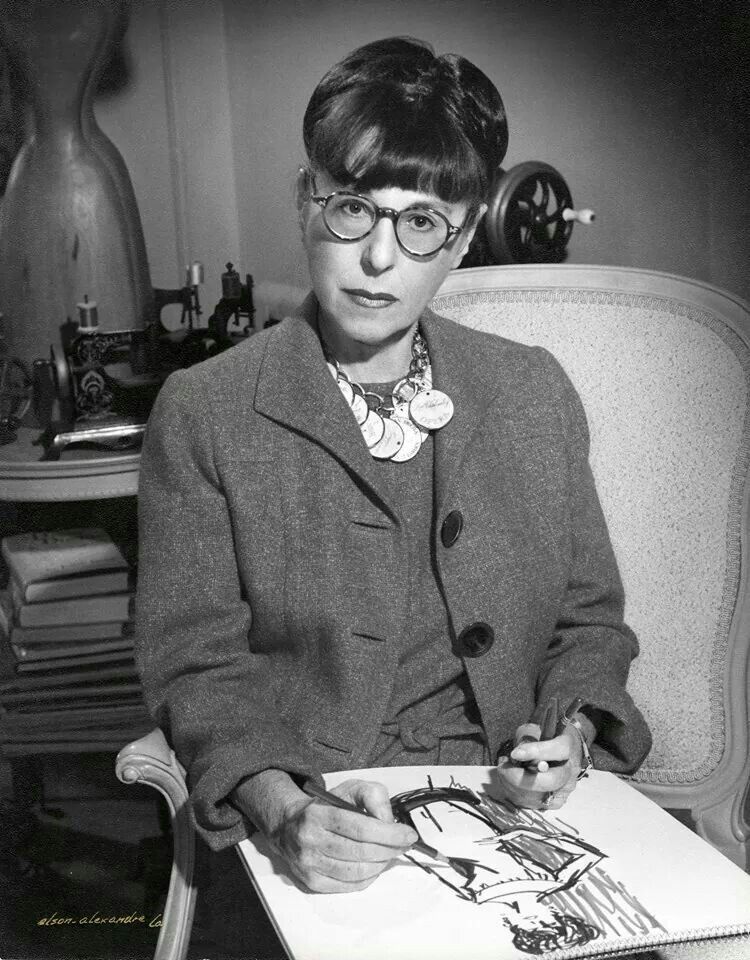
In 1924, Edith Head was hired as a sketch artist for costumes at Paramount Pictures. Her first works were costumes for silent films, for example, The Wanderer. Already in 1938, she became the chief costumer at the studio and the first woman to hold this position. Her favorite period was the 1930s, when stars wore fur and jewels.
She worked at Paramount Pictures until 1967 (43 years in total), after which she moved to Universal, continuing to work on cult films. Although her collaboration with Alfred Hitchcock began at Paramount, the joint work continued at Universal, where the designer moved in 1967.
It is interesting that while working at Paramount Pictures, stars of the cast often asked for Edith Head’s private services. For example, Barbara Stanwyck, Marlene Dietrich, and others.
Queen of Costumes
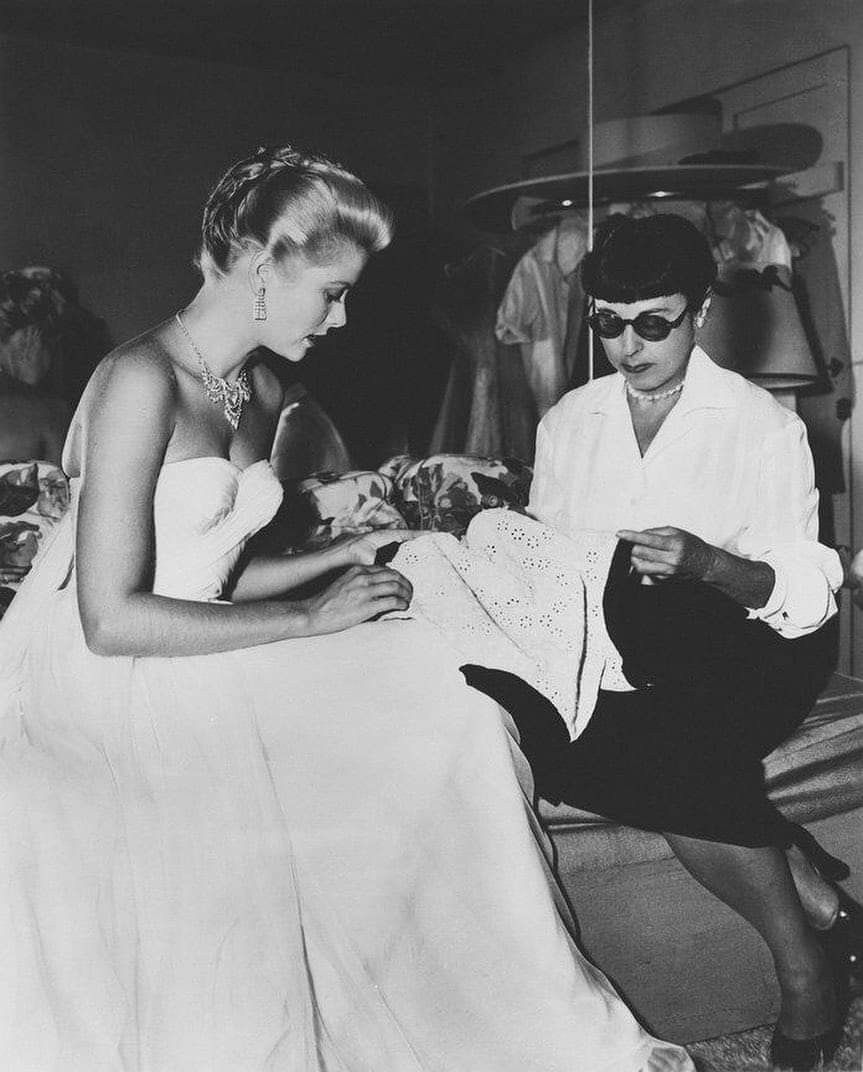
She was the first to begin personal consultations with actresses. This helped to select looks not only for the script but also for the character and the heroine’s fate. Edith Head was convinced that clothing is not just an adornment; it tells a story. That is why every dress created by her is a continuation of the heroine’s soul. At the same time, the woman did not chase trends, as she created them herself.
Edith Head stood out among others, as she focused attention on practicality and realism rather than on pure “high fashion.”
Main Collaborations and Awards
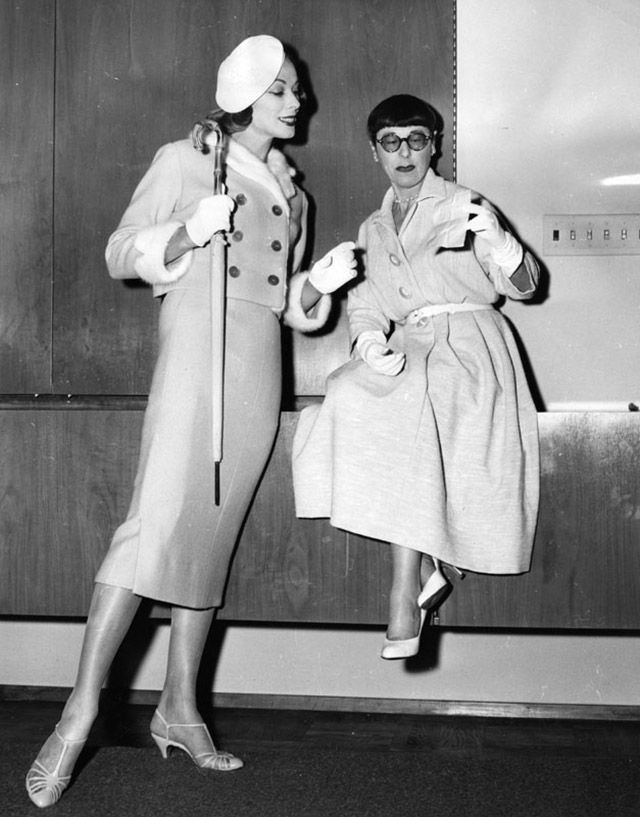
During her half-century career at Paramount and Universal, Edith Head created looks for hundreds of films. She collaborated with the biggest legends of that time:
- with Audrey Hepburn. This includes the project Roman Holiday with the transformation of Princess Ann from a restrained royal person to an independent girl;
- with Elizabeth Taylor in A Place in the Sun, Elephant Walk. The actress’s costumes emphasized her social beauty and drama, highlighting her figure and charm;
- with Grace Kelly, who is associated with a true embodiment of elegance and restraint (To Catch a Thief, The Bridges at Toko-Ri). Kelly’s looks symbolized perfection, aristocracy, and cold beauty;
- with Holly Golightly from Breakfast at Tiffany’s. The little black dress and tiara were created by Hubert de Givenchy, but Edith Head was responsible for the other costumes, demonstrating her mastery in the character’s everyday clothing;
- with Alfred Hitchcock. Edith Head added tension to the image through clothing. This is well-traced in such film works as The Birds (the iconic green suit), Rear Window (Grace Kelly’s costumes);
- with Bette Davis, Mae West, Barbara Stanwyck. Edith Head worked on their images, moving away from glamour and focusing on character.
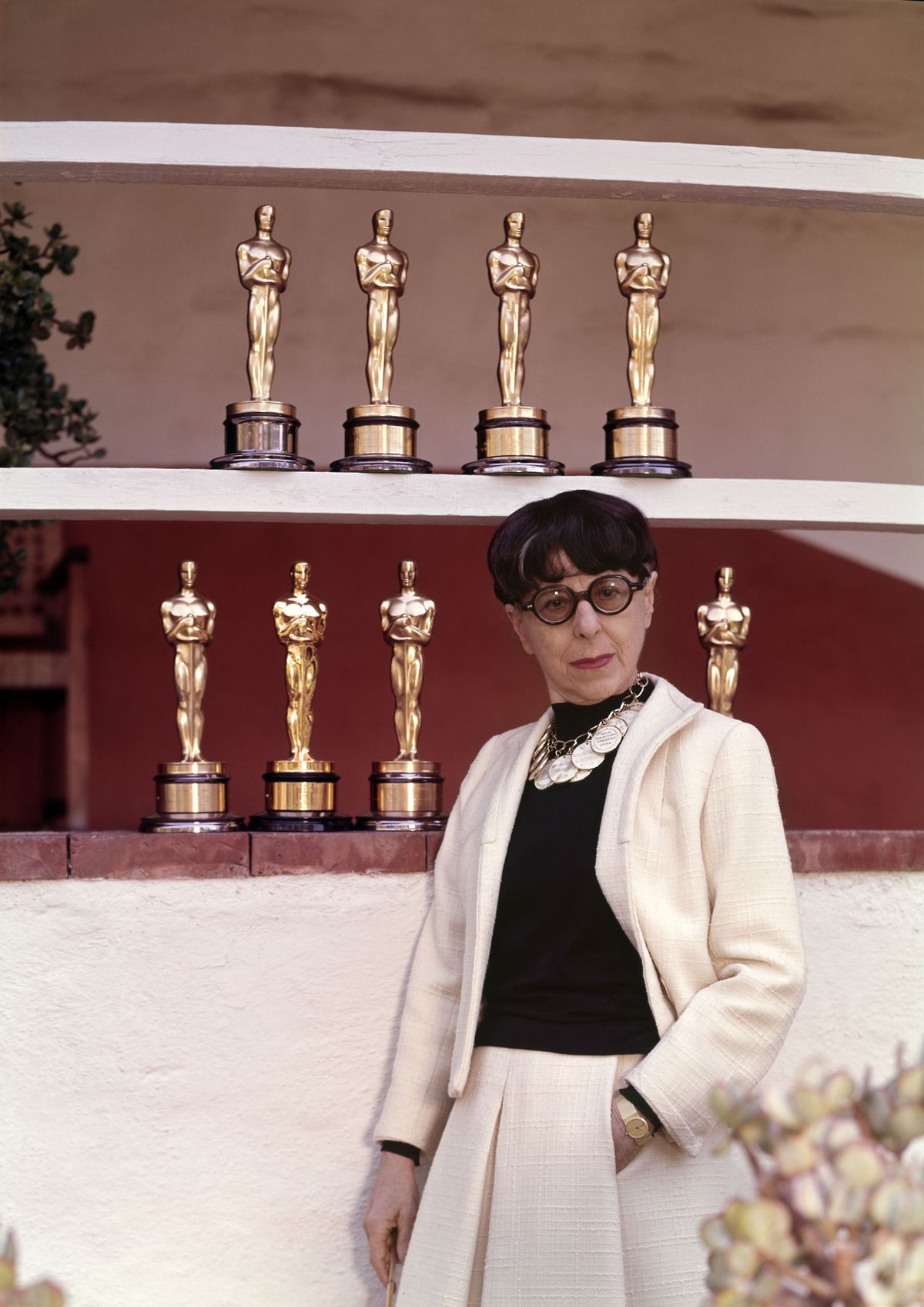
Edith Head’s influence on cinema, fashion, and culture is undeniable and colossal. She won a record 8 Academy Awards and 35 nominations, becoming the most-awarded woman in the history of this prestigious film award. She called her Oscars her children.
And in the late 1970s, Edith Head was asked to design the women’s uniform for the US Coast Guard (a unit of maritime security, search and rescue service, and law enforcement service of the US Armed Forces). For this work (according to her, it was the brightest achievement in her career) she received the “Distinguished Public Service Award.”
Legacy and Cultural Influence
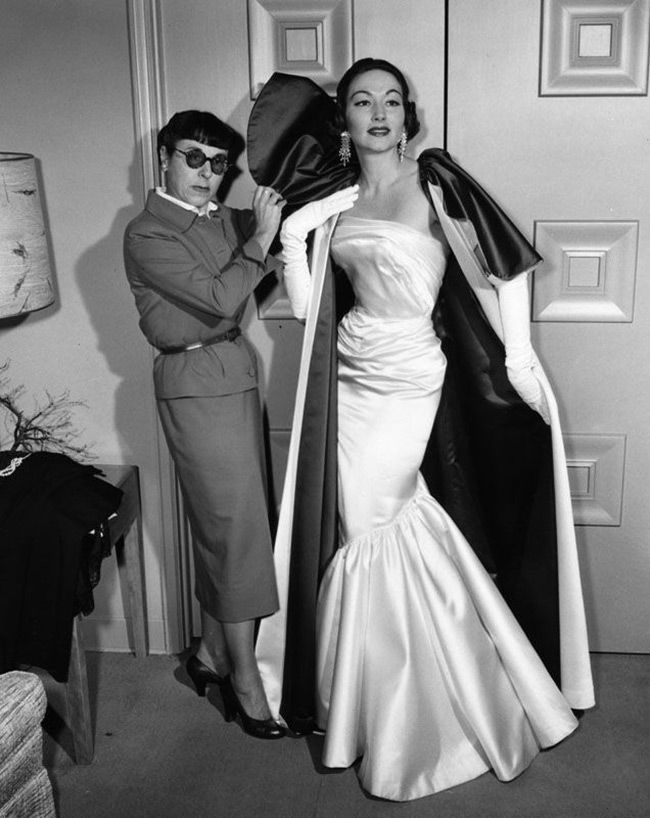
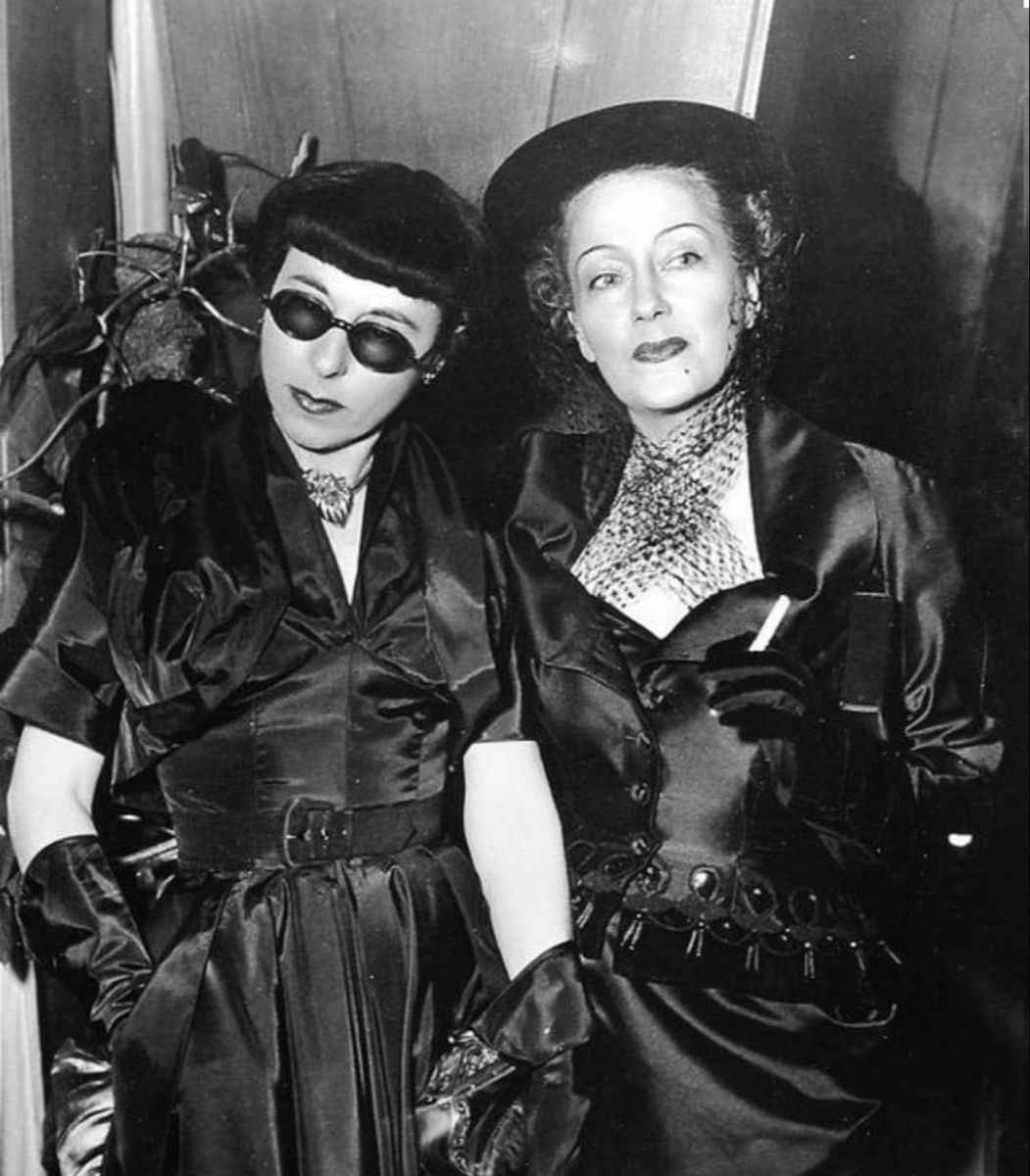
Her unchanging image was a restrained hairstyle and thick-rimmed glasses, impeccable taste. She loved simplicity and preferred conservative two-piece suits.
Edith Head’s images still influence modern designers; they are inspired by her works.
- Costumes from Sabrina. Edith Head worked with Hubert de Givenchy for the Parisian wardrobe, being responsible for the American part. Edith Head received the “Oscar” thanks to the rules of the studio system, and Hubert de Givenchy was not mentioned at the time. Because of this, a loud scandal arose.
- Hitchcock’s Style. She first worked with the director in 1946 on the spy film Notorious. The costumes developed for this film were restrained and reflected the character’s nature. The hero in such a costume was restrained and could blend in with the crowd. Collaboration with Alfred was one of the most important in her career. She chose restrained, but perfectly tailored costumes that contrasted with the terrible events. The images created by her seemed to emphasize that misfortune can happen even to elegant people.
In 1974, a star for Edith Head is located on the Hollywood Walk of Fame.
Edith Head is the author of two books: The Dress Doctor (1959) and How to Dress for Success (1967). In these books, the author describes her career and design philosophy. The books were reissued in 2008 and 2011.
Edith Head’s image appears in cartoons, for example, Edna Mode from The Incredibles.
She died on October 24, 1981, not living 4 days until her 84th birthday. The cause was an incurable bone marrow disease. Edith Head rests in the Forest Lawn Memorial Park in Glendale, California.
Eternal Elegance of an Icon
Edith Head could tell stories using fabric, needle, and thread. She understood well that clothing is an inseparable part of dramaturgy. The number of awards (8 “Oscars”) testifies to her unsurpassed mastery and professional dedication. Edith Head left behind a monumental legacy: from the luxurious evening gowns of the “Golden Age” of Hollywood to the development of tense images for Hitchcock.
Elegance, hard work, unwavering professionalism—all this secured for Edith Head the title “Queen of Hollywood Style.” Reviewing classic films, modern viewers continue to admire the eternal elegance of the images created by the unsurpassed Edith. If it weren’t for her, perhaps we would not know what female power looks like on screen. Style, thanks to her work, gained a voice that sounds in every frame of classic cinema.
Sources: