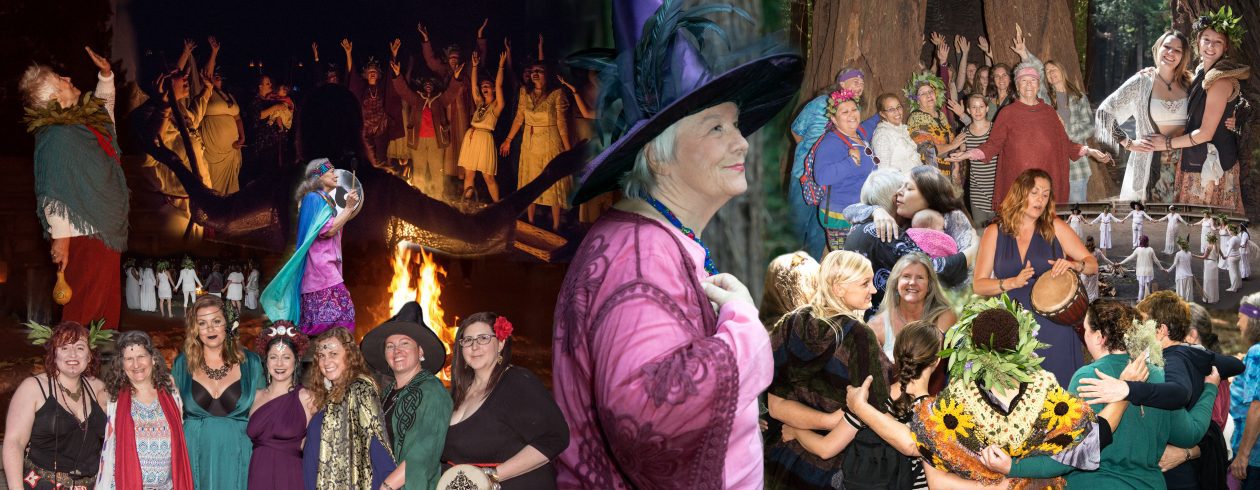

She is a renowned Hungarian-American author, activist, playwright, and songwriter. Living in California, she writes about feminist spirituality under the striking pseudonym “Zsuzsanna Budapest” and is a staunch advocate for women. Losangeleska shares more about her life and work.
Early Life
Zsuzsanna Emese Mokcsay (her real name) was born in Budapest in 1940. Her mother was a medium, a practicing witch, and a professional sculptor. Her mother’s work, Masika Szilagyi, often reflected themes of female divinity and nature spirituality.
After the Hungarian Revolution began in 1956, Zsuzsanna fled to Austria, receiving the status of a political refugee. She completed high school in Innsbruck, Austria’s fifth-largest city. She graduated from a bilingual gymnasium and then received a scholarship to the University of Vienna, a public research university, where she chose linguistics, driven by her interest in the scientific study of language.
She immigrated to the United States in 1959. Zsuzsanna attended the University of Chicago, studying with Viola Spolin, an innovator in American theater and improvisation, and The Second City, the oldest improvisational theater troupe.
She founded feminist Dianic Wicca (also known as Dianic Witchcraft), a tradition accessible only to women, and an online school that studies the goddess within. It is a modern pagan goddess tradition focused on female experience, empowerment, and rights. Dianic covens practice meditation and visualization in addition to spells.
Feminism
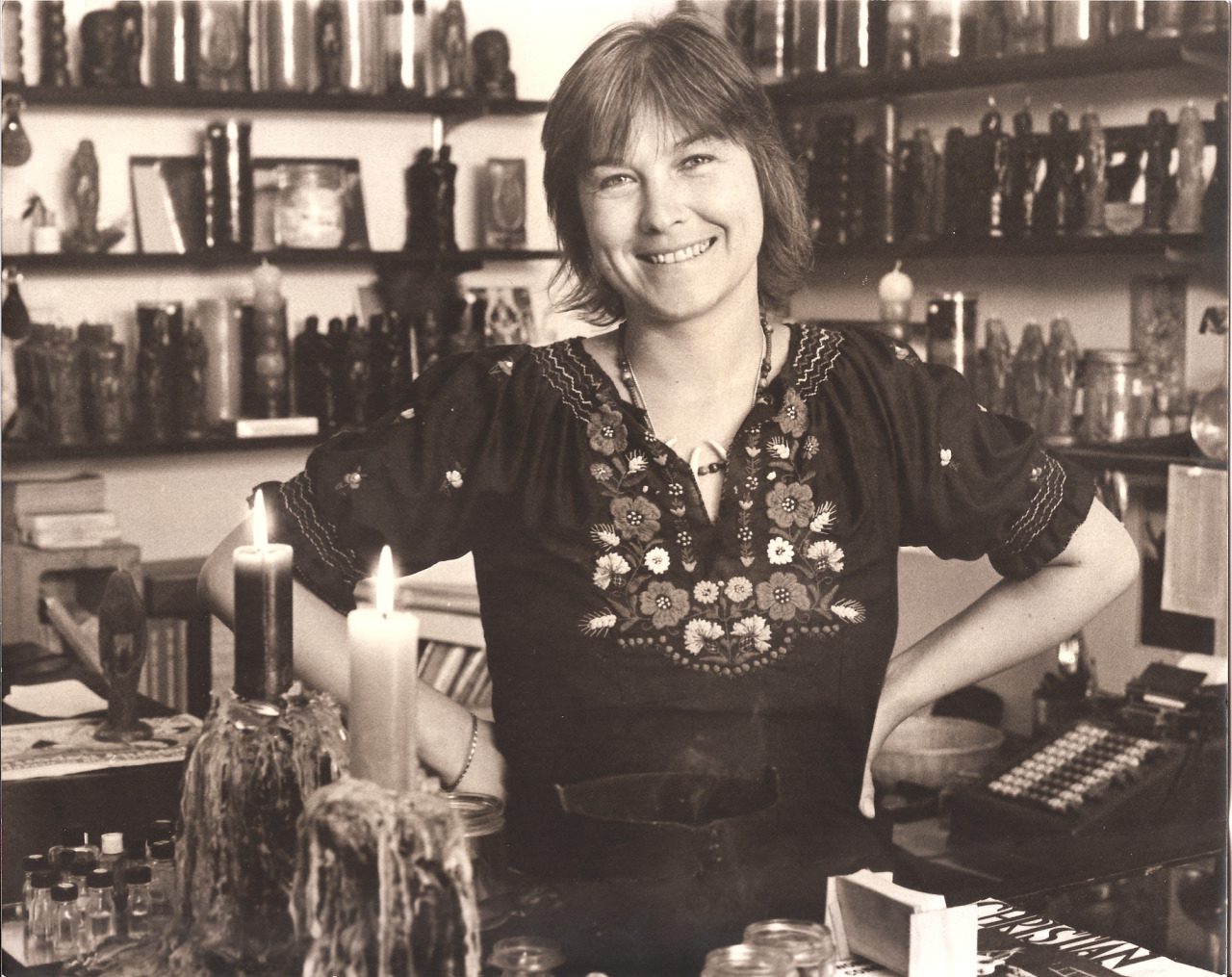
Zsuzsanna moved from New York to Los Angeles in 1970. From that time, she became an activist in the Women’s Liberation Movement, which represented a political alliance of women and feminist intellectualism.
Zsuzsanna Budapest was responsible for creating an anti-rape squad. She is also credited with helping to establish “Take Back the Night.” This is an international event and non-profit organization whose main goal is to end sexual and domestic violence in all its forms. Hundreds of events, marches, and rallies are held annually in over 30 countries. In 2001, a group of women who participated in the first marches united to create the Take Back the Night Foundation.
This was a crucial step, as incidents of violence against women in the 1970s in Philadelphia, San Francisco, and Los Angeles did not go unnoticed by the media. In 1972, women at the University of South Florida donned black capes, carried witches’ brooms, and marched across campus demanding resources and safety for women. In 1973, residents of San Francisco began protesting pornographic films.
In 1975, microbiologist Susan Alexandra Speeth was brutally stabbed to death on the street after work. Philadelphia residents took to the streets in protest. All these events drew media and public attention to the issue of women’s safety on the streets.
After this work, Zsuzsanna noticed that the feminist movement lacked a spiritual dimension. She sought to change this situation by launching a women’s spirituality movement to unlock female power.
In 1971, she became the founder and high priestess of the first all-female witches’ coven, named the “Susan B. Anthony Coven #1.” This is the first documented women-only coven. Coven #1 is the prototype of Dianic Wicca, named for the chaste Roman goddess Diana, who refused suitors and was known for her feminist ideology. The founding of this coven influenced hundreds of others that subsequently appeared and spread throughout the country.
Writing
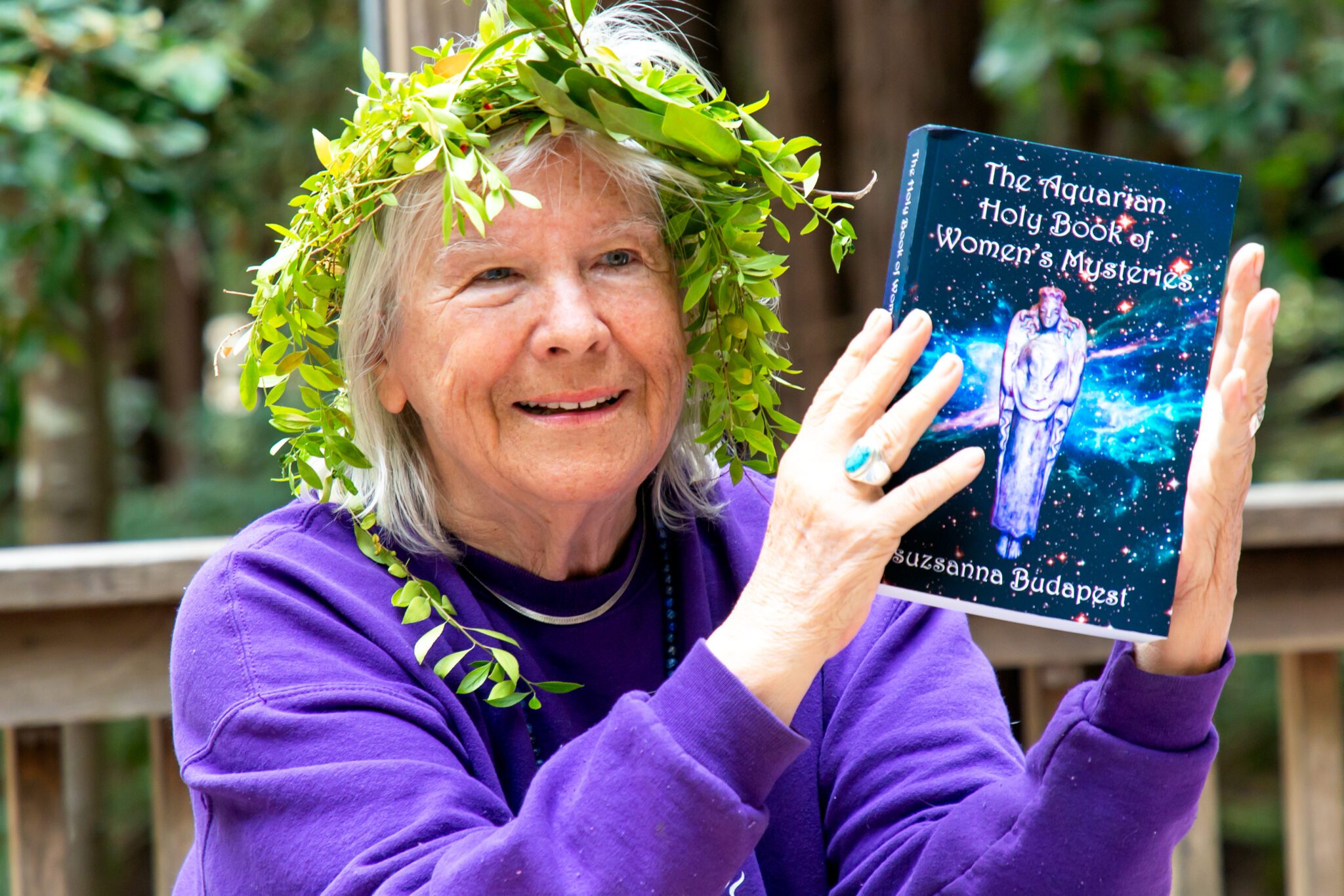
In 1975, she published a manifesto titled “The Feminist Book of Lights and Shadows,” which was later renamed “The Holy Book of Women’s Mysteries.” This book by Zsuzsanna Budapest provided the first practical approach for women to discover their spirituality.
The year 1975 was important creatively, but also marked by a grim legal battle. Zsuzsanna owned a candle and book store in Venice, a neighborhood in Los Angeles. At that time, Rosalie Kimberlin, an undercover police officer, approached Zsuzsanna for a tarot reading. Fortune-telling was illegal in those days, and she was arrested and charged. Interestingly, Zsuzsanna went down in history as “the first witch to be prosecuted since Salem.” The ensuing trial became a media focal point, also drawing protests from the pagan community. Zsuzsanna was initially found guilty. She and her legal team appealed the verdict for nine years, arguing that Dianic Wicca was a genuine religion and the reading was spiritual counseling. Ultimately, the California Supreme Court overturned the conviction, and Zsuzsanna was acquitted. This landmark case led to the laws prohibiting fortune-telling being struck from California’s legislation.
She has written and published more than 10 books. In 2014, audiences could learn more about the author from her book, “My Dark Sordid Past as a Heterosexual: An Autobiography of Dr. Zsuzsanna E. Budapest, Volume One.”
Interesting Facts
- Zsuzsanna Budapest’s first television job was on “The Ed Sullivan Show.” In the 1980s, she created her own television show, “13th Heaven,” which aired for seven years on public-access TV in the San Francisco Bay Area.
- In the early 1980s, Zsuzsanna sold her Los Angeles store and left her coven to another priestess, Ruth Rhiannon Barrett. The coven’s name was changed to “Moon Birch Grove.” In 2007, Bobbi Grenier revived the original coven, bringing back Zsuzsanna Budapest as its founder. In 2016, Bobbi changed the name to The Sisterhood Blessing All Communities. It has since been a sisterhood that accepts annual donations.
- She moved to Oakland, California, where she founded a new coven and began working in television.
- In 1991, Zsuzsanna founded the International Goddess Festival. For example, the event is traditionally held from September 5-8 in La Honda, California. The feminist and spiritual leader conducts workshops and rituals that empower women and share wisdom. By choosing the full package, city dwellers can get lodging, meals, and activities like yoga, drumming, and dancing with Astarte.
- Zsuzsanna Budapest has authored several songs, one of which is “We All Come From the Goddess.”
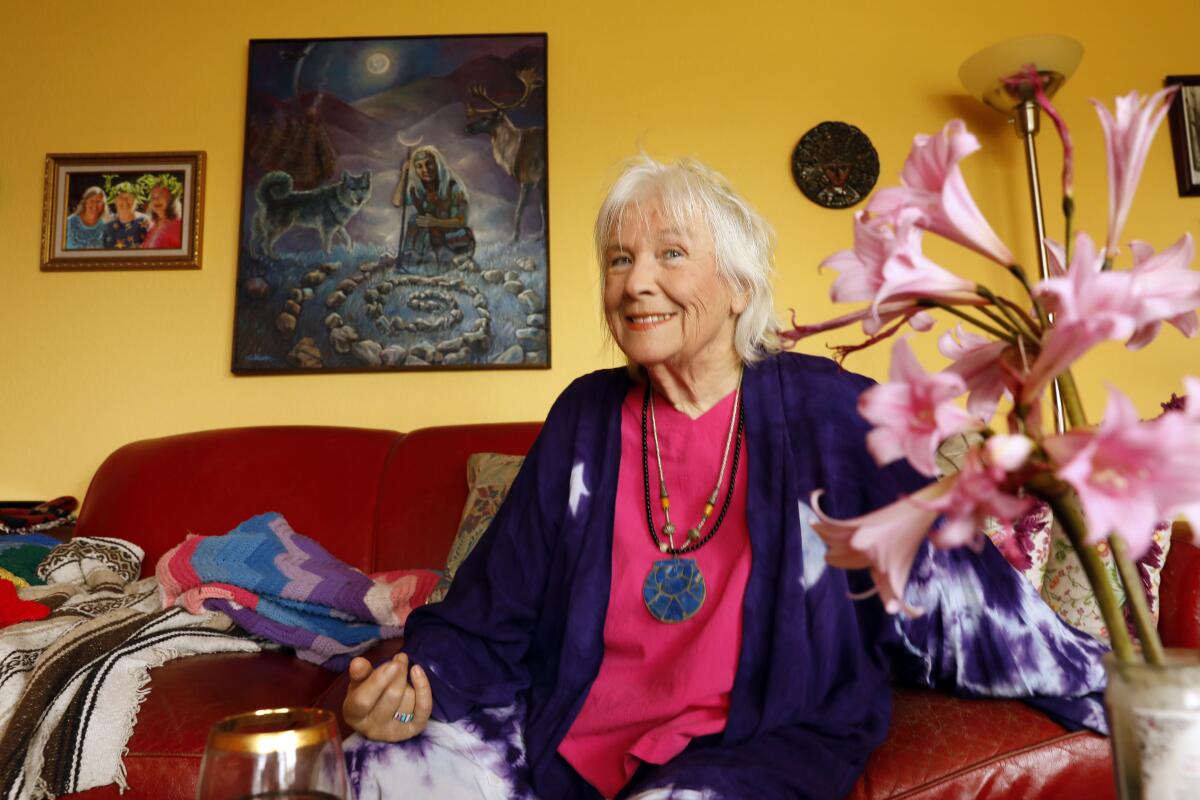
- As of 2019, she lives in Central California, near Santa Cruz.
Her personal life is as interesting as her public one. She was married and had two sons, Laszlo and Gabor, but later divorced. The woman realized she was a lesbian, which led to her decision.
Zsuzsanna Budapest is considered a figure who played a significant role in the development of modern paganism and the feminist movement. For instance, she created and popularized Dianic Wicca. This movement allows women to explore their spirituality more deeply, develop their talents, and find support in a circle of like-minded individuals.
She is also an active writer, lecturer, and public figure. Her works have influenced other women, helping them discover a spirituality focused on female power and energy. In conclusion, Zsuzsanna has demonstrated through her own example how one person can change the world and make their own significant contribution.