

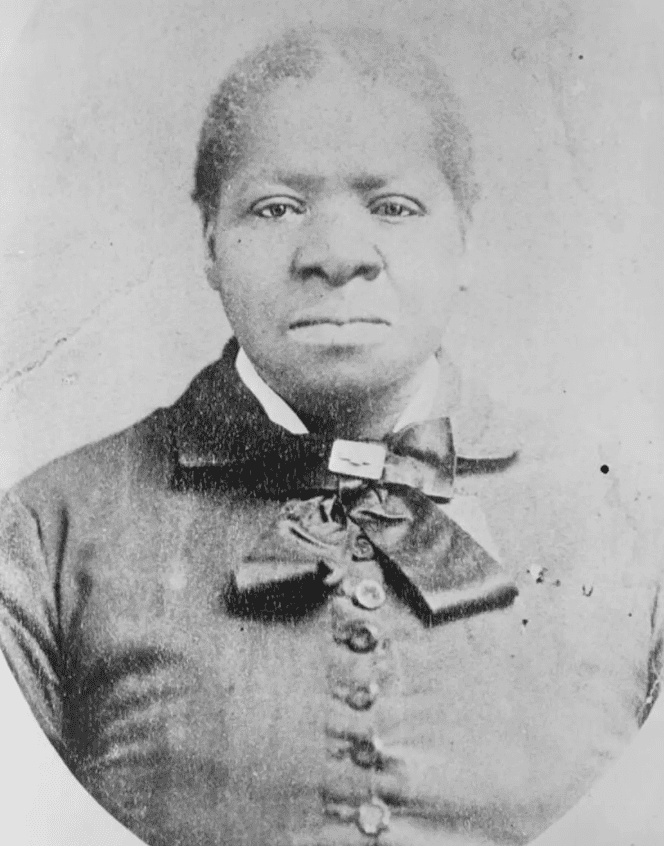
Little Bridget was a slave. However, she managed not only to break free in 1856 and settle in Los Angeles but also to become a pioneer in real estate. Losangeleska tells more about her life, obstacles in it and ways to overcome them.
American heroine
When reading information about Bridget Biddy Mason, one usually encounters the description of a woman as an American heroine. This only increases interest in her personality.
The woman managed to get the freedom she dreamed of. Moreover, she became one of the first renowned citizens and landowners in Los Angeles (1850-1860s). She had to go through a lot of hardships that made Biddy only stronger.
Bridget Mason and her son-in-law Charles Owens created the first African Methodist Episcopal Church in the city in 1872. It is the oldest such church in the region.

Mason’s childhood and youth
She was born in Mississippi in 1818. The girl was named Bridget but later everyone started calling her Biddy. Her slave owners lived in Georgia and South Carolina before returning to Mississippi. The last owner was Robert Smith. After the call of the church, he moved his family together with the enslaved people to the West. The man also launched and financially helped the Mormon community.
In 1848, Bridget Mason was 30 years old. She had to set up the camp and house other enslaved people. Her duties included cooking and grazing cattle. In addition, she was a midwife, helping other women with childbirth. At that moment, Bridget had three young daughters, 10 years old, 4 years old and a newborn baby.
In 1851, Robert Smith again decided to move. This time he went to California. A caravan of 150 wagons headed for San Bernardino despite the warning of the illegality of slavery in California. On the way to the sunny city, Bridget met a free African-American couple. The Rowans advised her to legally challenge her slave status in California.
Smith began to worry about losing his slaves. Therefore, he made an urgent decision to move to Texas. The Owens family hindered the man. At that moment, Owens’ son was dating Bridget’s daughter. He complained to the county sheriff about the illegal holding of slaves. The response to the appeal was urgent.
The struggle for freedom
The sheriff immediately assembled people and held Smith’s van back. On January 21, 1856, a Los Angeles County judge released Mason and her large family of thirteen people. She took the surname Mason and went to Los Angeles together with her family. It was a moment of change. Her new free life began and that was crucial.
After the move, Bridget’s daughter gave birth to a son and a daughter. Biddy worked as a midwife and nurse. She devoted a lot of time and energy to work, saved funds and spent them on investments, buying land in Downtown Los Angeles.
Her fortune later grew to $300,000 and she became a philanthropist in the city’s community. Biddy Mason spent a large part of her earnings on charity, donations, visiting prisoners, feeding and sheltering the poor. She established a Travelers Help Center and an elementary school for young African-Americans, realizing the importance of education.
In the nameless grave
Her life ended on January 15, 1891. The role of Bridget Mason in Los Angeles was enormous. Despite this, she got only an unmarked grave in Evergreen Cemetery. Only in 1988, the mayor of the city and church members held a ceremony and marked her grave with a tombstone. This is a tribute to the respect that a woman deserves.