

Alma Lopez holds a unique place in contemporary American art. The Mexican-born artist creates thought-provoking works that spark intense debate, shatter stereotypes, and reimagine traditional cultural symbols. Her art blends digital mediums, photography, and historical imagery, viewing them through the modern lens of women, Indigenous communities, and the LGBTQ+ spectrum. Lopez also teaches at the University of California, Los Angeles (UCLA), where she passes her expertise on to a new generation of creatives. For over two decades, her artistic endeavors have drawn both deep admiration and fierce controversy. This dual reception makes her a pivotal figure in the modern cultural landscape, both in the U.S. and abroad. Read more on losangeleska.
Biography
Alma Lopez was born in 1966 in Los Mochis, Sinaloa, Mexico. Her family moved to Los Angeles when she was a child. Growing up between Mexico and the United States gave the artist a profound sense of border culture. The heavy influence of Catholic imagery, particularly the Virgin Mary, intertwined with elements of Indigenous Mexican beliefs and traditions. This rich cultural blend eventually became the foundation of her art.
Lopez earned her degrees from several top-tier institutions. She holds a Bachelor of Arts from the University of California, Santa Barbara (UCSB) and a Master of Fine Arts from the University of California, Irvine (UCI). She also earned a photography certificate from UCLA Extension.
Artistic Language
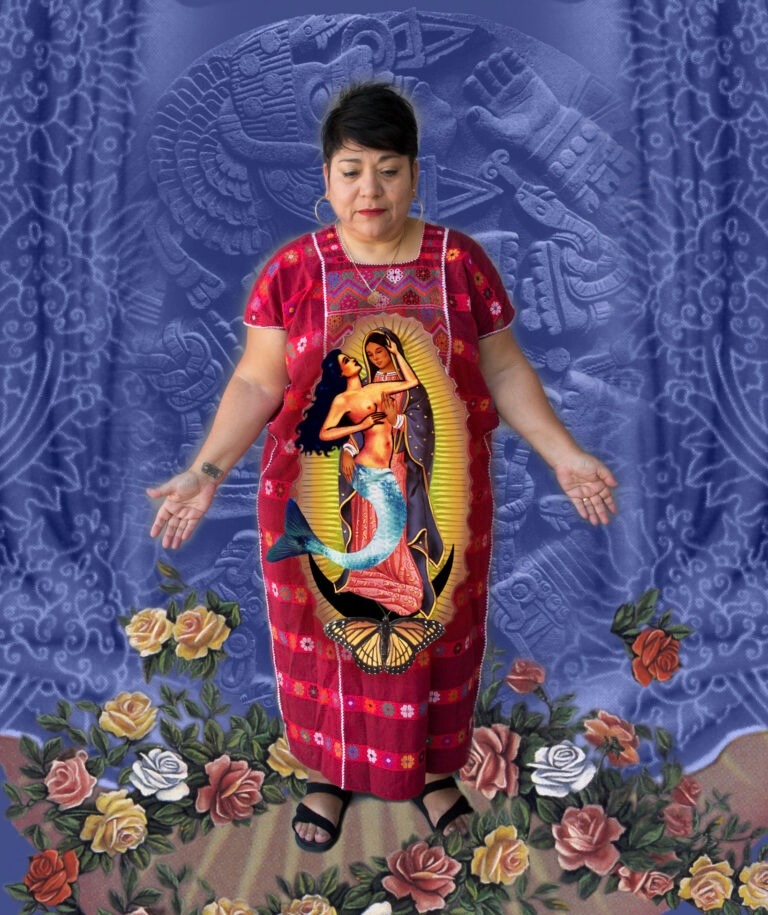
Lopez’s work stands out for its bold reimagining of traditional imagery. She uses digital technology to merge Catholic symbols with elements of Indigenous cultures, creating entirely new meanings in the process.
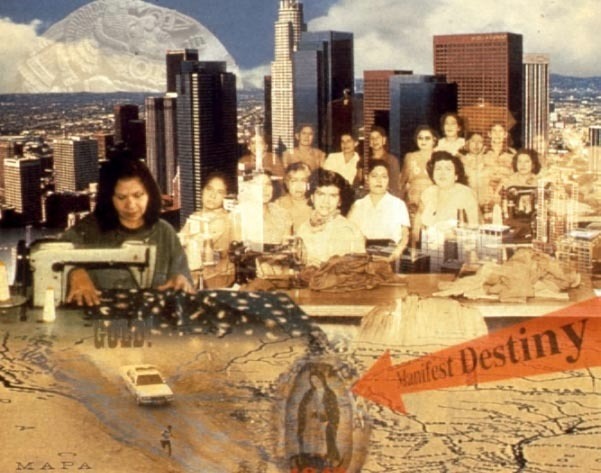
Her pieces tackle complex, often taboo subjects. These include gender-based violence, sexual marginalization, racism, and the lingering legacy of colonialism. Through her art, Lopez strives to amplify the voices of women and Indigenous people whose histories have been silenced or distorted. A hallmark of her approach is that she doesn’t just critique the status quo; she offers a fresh vision where women are strong, autonomous, and undeniably visible.
Lopez doesn’t shy away from provocation. In fact, it’s a vital part of her creative method. Her pieces often trigger intense reactions because they fuse religious symbols with pressing contemporary social issues. Yet, it’s exactly this controversial edge that allows her to open new avenues for dialogue. She sparks conversations about the roles of women, the LGBTQ+ community, and cultural heritage in today’s world. Her art doesn’t just reflect reality—it actively shapes public discourse. In 1999, UCLA’s student-run La Gente Newsmagazine dubbed her a “Digital Diva” for her innovative approach to art.
Signature Works
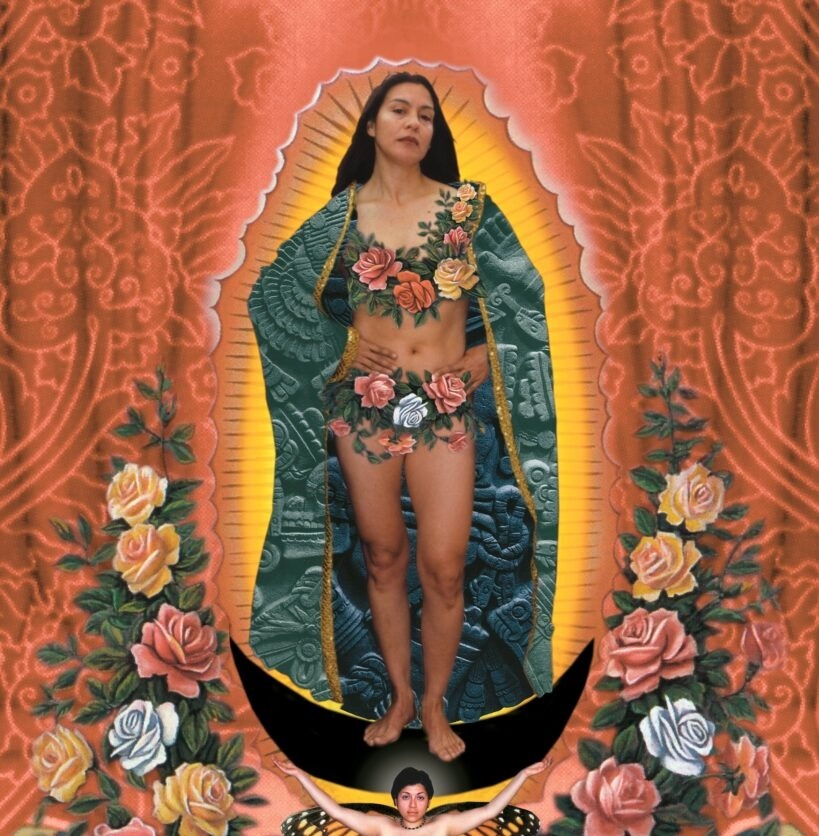
One of the artist’s most famous pieces is Our Lady, a digital print that has become emblematic of her career. In this artwork, a model wearing a bikini made of roses stares confidently at the viewer, radically reimagining the Virgin of Guadalupe. Lopez blends traditional iconography with elements of Aztec mythology, specifically channeling the goddess Coyolxauhqui. This fusion highlights how colonial religious symbols overtook Indigenous beliefs. At the same time, it reflects a modern artist’s effort to reclaim these icons for her own cultural space. For Lopez, the Virgin of Guadalupe isn’t just a religious figure; she is a cultural and political symbol deeply tied to women’s rights movements.
Our Lady sparked massive uproar when it was exhibited at the Museum of International Folk Art in Santa Fe in 2001. Religious figures issued harsh criticisms, slamming the piece as highly provocative. The artist, however, maintained that her goal wasn’t to shock people, but to showcase real women and their inherent strength. The controversy surrounding the piece snowballed into a broader national debate about artistic freedom, censorship, and who has the right to interpret cultural symbols. The threats hurled at Lopez and the exhibition’s curators only highlighted the deep tension between traditional values and contemporary art. Lopez later unpacked this intense experience in her book, Our Lady of Controversy: Irreverent Apparition.
Lopez’s portfolio includes several other major projects that reveal different facets of her artistic vision:
- Heaven 2 — a mural depicting a woman reminiscing about her female lover. The piece tragically became the target of vandalism and homophobic attacks;
- Lupe and Sirena in Love — presents an intimate portrayal of romance between two iconic female figures in Mexican culture, shattering traditional notions of gender and sexuality;
- La Historia de Adentro/La Historia de Afuera — a massive mural that chronicled the history of a local community. Despite fierce efforts to save it, the mural was destroyed, sparking outrage in the art world;
- La Llorona Desperately Seeking Coyolxauhqui — a piece where the artist merges the figures of a mortal woman and a goddess, emphasizing themes of loss, violence, and female empowerment.
Teaching and Influence
Beyond her studio practice, Alma Lopez is a dedicated educator. At UCLA, she teaches courses on queer art. Her teaching focuses on fostering critical thinking and championing young creatives, especially those from marginalized backgrounds. Her work in the classroom has earned her several prestigious honors. Among them are the Richard T. Castro Distinguished Visiting Professorship at the Metropolitan State University of Denver and the student-voted LGBTQ Lavender Graduation Award at UCLA.
Throughout her career, Lopez has secured numerous high-profile grants from organizations like the City of Los Angeles, the California Community Foundation, the Astraea Lesbian Foundation for Justice, and the Durfee Foundation. Her contributions have also been recognized with academic awards from UCLA, specifically for her innovative educational programs and commitment to diversity. Her early accolades include the Pollock-Siqueiros Binational Visual Arts Prize, underscoring her international acclaim.
Lopez’s art has been featured in over a hundred solo and group exhibitions across the globe. Her pieces have been showcased in major cultural hubs, including Mexico City, Naples, Cork, and cities throughout the U.S. Some of the most notable institutions to display her work include the UCLA Fowler Museum of Cultural History in Los Angeles, the Sheldon Museum of Art, the Mexic-Arte Museum, and the International Print Center New York. Her pieces also belong to the permanent collections of top-tier museums like the Museum of International Folk Art, the Oakland Museum of California, and the McNay Art Museum. This extensive presence is a testament to the profound recognition of her impact on contemporary art.
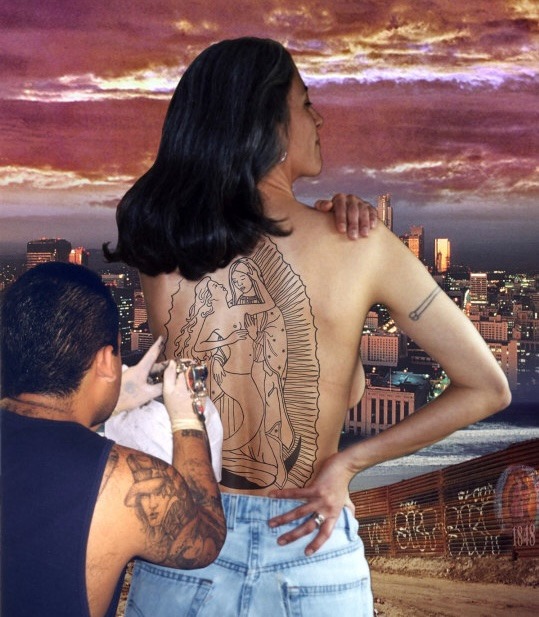
Alma Lopez’s art is a prime example of how creative practice can drive social change. She rewrites history, restores visibility to marginalized groups, and carves out spaces for crucial dialogue. Her work challenges viewers to rethink their preconceived notions about religion, gender, and culture, offering fresh perspectives on identity in a globalized world.
More than just an artist, Alma Lopez is a cultural trailblazer who is changing the way we view both history and the modern era. Her work remains as relevant, provocative, and deeply personal as ever. She continues to shape the artistic discourse, inspiring new generations to reimagine the world through art.