

The name Kim Kardashian has long transcended reality TV and tabloid headlines; today, she is one of the most formidable forces in the global fashion industry. Her looks are dissected by major fashion bibles, top-tier designers create custom pieces specifically for her, and every red carpet appearance becomes an instant viral sensation. However, her ascent to fashion icon status was a calculated evolution. In the early 2000s, Kardashian was primarily known as socialite Paris Hilton’s sidekick. Since then, she has meticulously built a global empire and a style that is instantly recognizable. Her journey is a masterclass in how a media personality can transform into a defining cultural symbol of an era. Read more on losangeleska.
The Paris Hilton Years
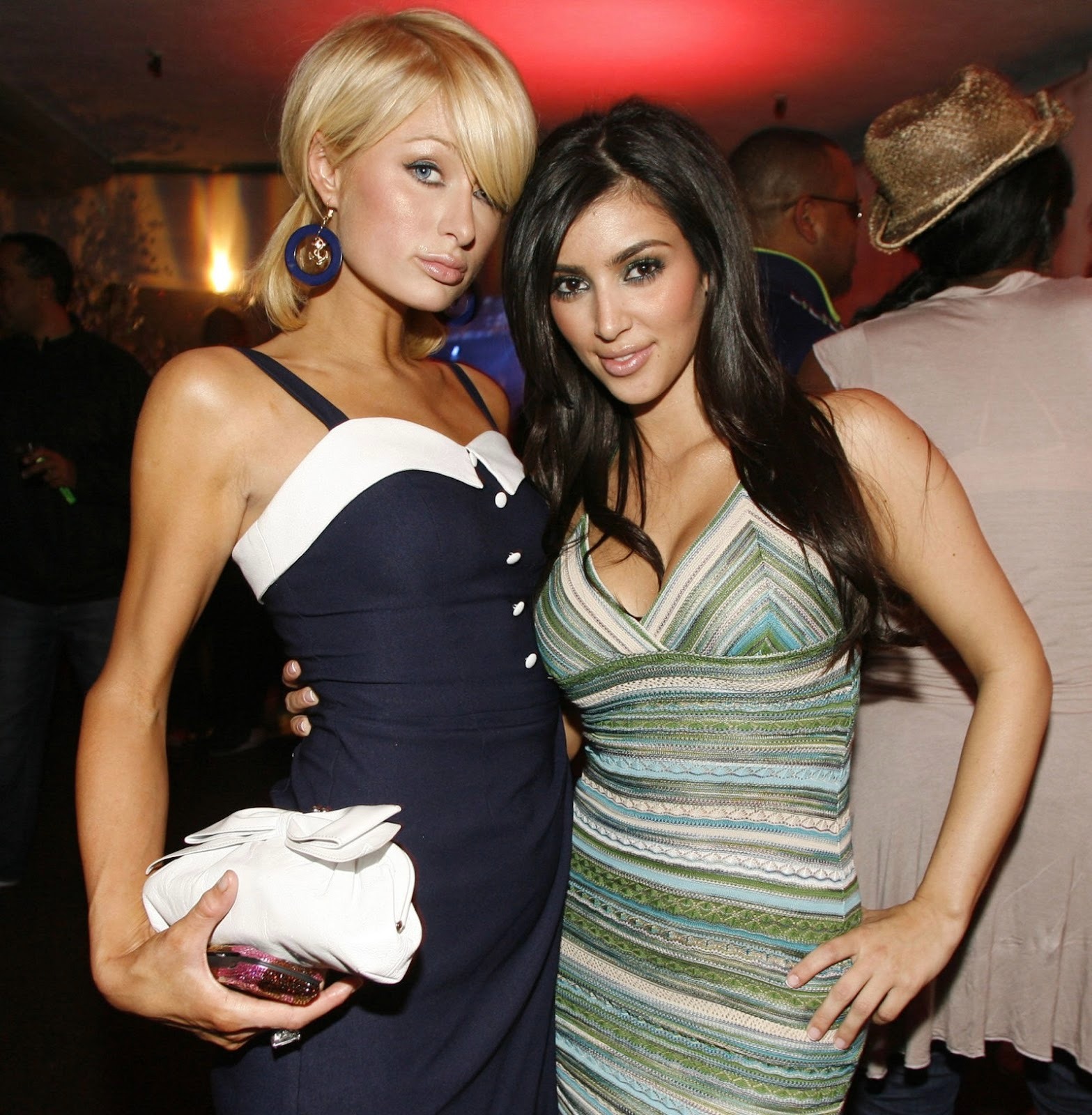
Kim Kardashian first entered the public consciousness in the early 2000s while working as an assistant and stylist for Paris Hilton, the ultimate “It Girl” of that decade. It was through this high-profile friendship that Kardashian began appearing in social columns. Paparazzi constantly captured the duo during jet-setting trips, parties, and shopping sprees. Gradually, Kim became a recognizable face in the media, with her name gaining traction across the tabloid circuit.
The real turning point for her public persona came in 2007 with the premiere of “Keeping Up with the Kardashians.” The reality show followed the lives of the Kardashian-Jenner family and quickly became a cultural phenomenon, transforming the clan into one of America’s most famous media dynasties.
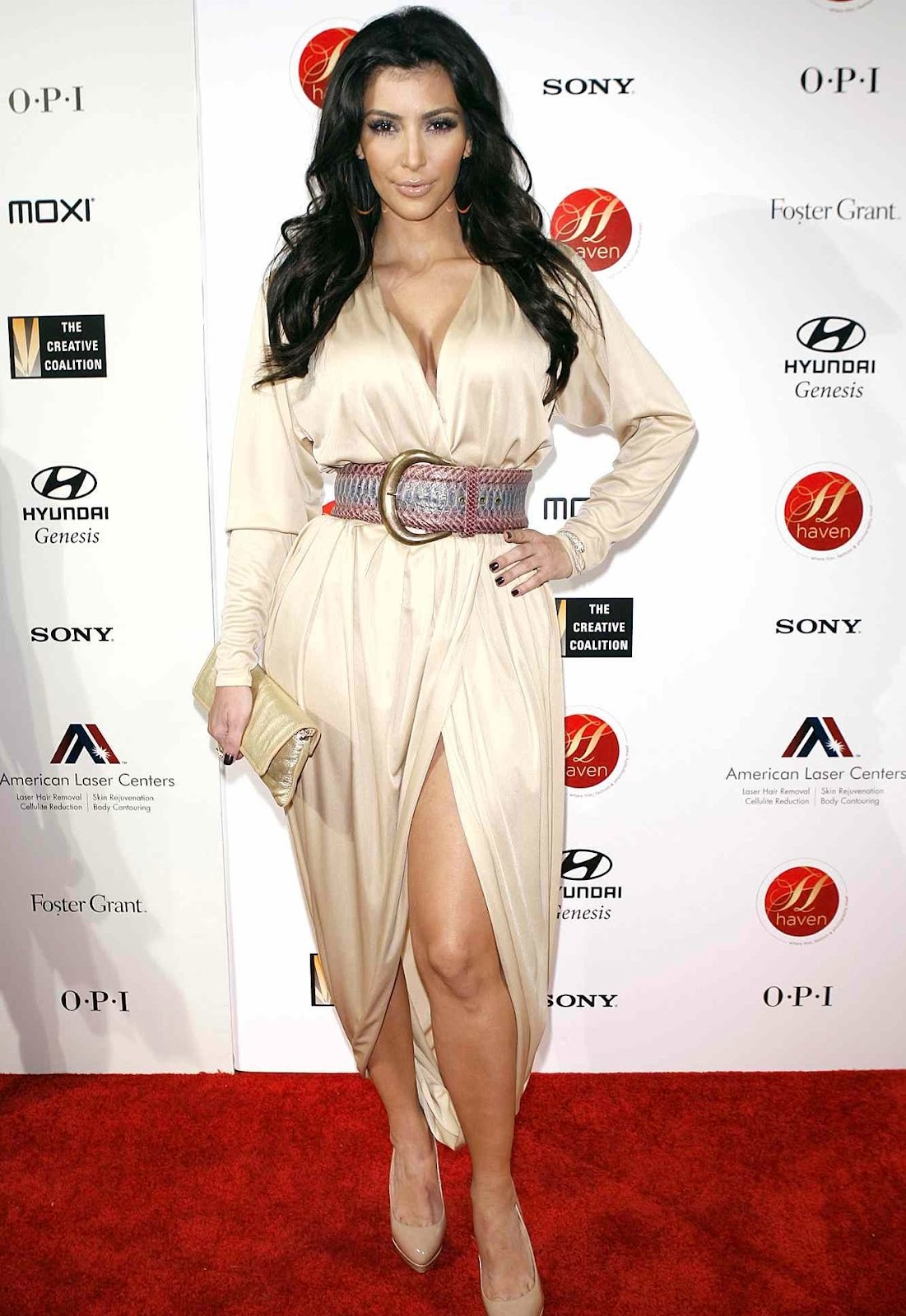
In those early years, Kim embraced the loud, high-glamour aesthetic typical of the early 2000s—the era now known as Y2K fashion. Her wardrobe was dominated by body-con dresses with plunging V-necks, knee-high boots, towering platforms, oversized sunglasses, and chunky statement accessories. She was rarely seen without her signature wide patent leather belts and massive hoop earrings. Kim later admitted in interviews that she made a point of attending as many events as possible to capture media attention, often crediting Paris Hilton as her mentor in the complex world of show business.
A High-Fashion Renaissance
The true watershed moment in Kim’s style evolution occurred after 2012, when she began dating rapper and designer Kanye West. West famously overhauled her entire wardrobe, encouraging her to ditch the neon colors, sequins, and bandage dresses in favor of sleek silhouettes and a neutral palette. It was through Kanye that Kim gained entry into the inner circles of the fashion elite. One of her earliest supporters was Riccardo Tisci, who was then the creative director of Givenchy.
In 2013, Kim made her Met Gala debut, wearing a now-infamous floral Givenchy gown designed by Tisci. While the “floral couch” look sparked intense debate, it succeeded in making the fashion world take notice. Kardashian was no longer just a reality star; she was a muse.
By 2014, Kim and Kanye landed the cover of “Vogue,” a move that caused a stir among fashion traditionalists. Many felt a reality star didn’t fit the magazine’s prestige. However, Editor-in-Chief Anna Wintour defended the choice, stating that “Vogue” has always reflected the cultural zeitgeist, and Kim and Kanye were its undisputed leaders. This moment officially cemented Kardashian’s status as a serious power player in the industry.
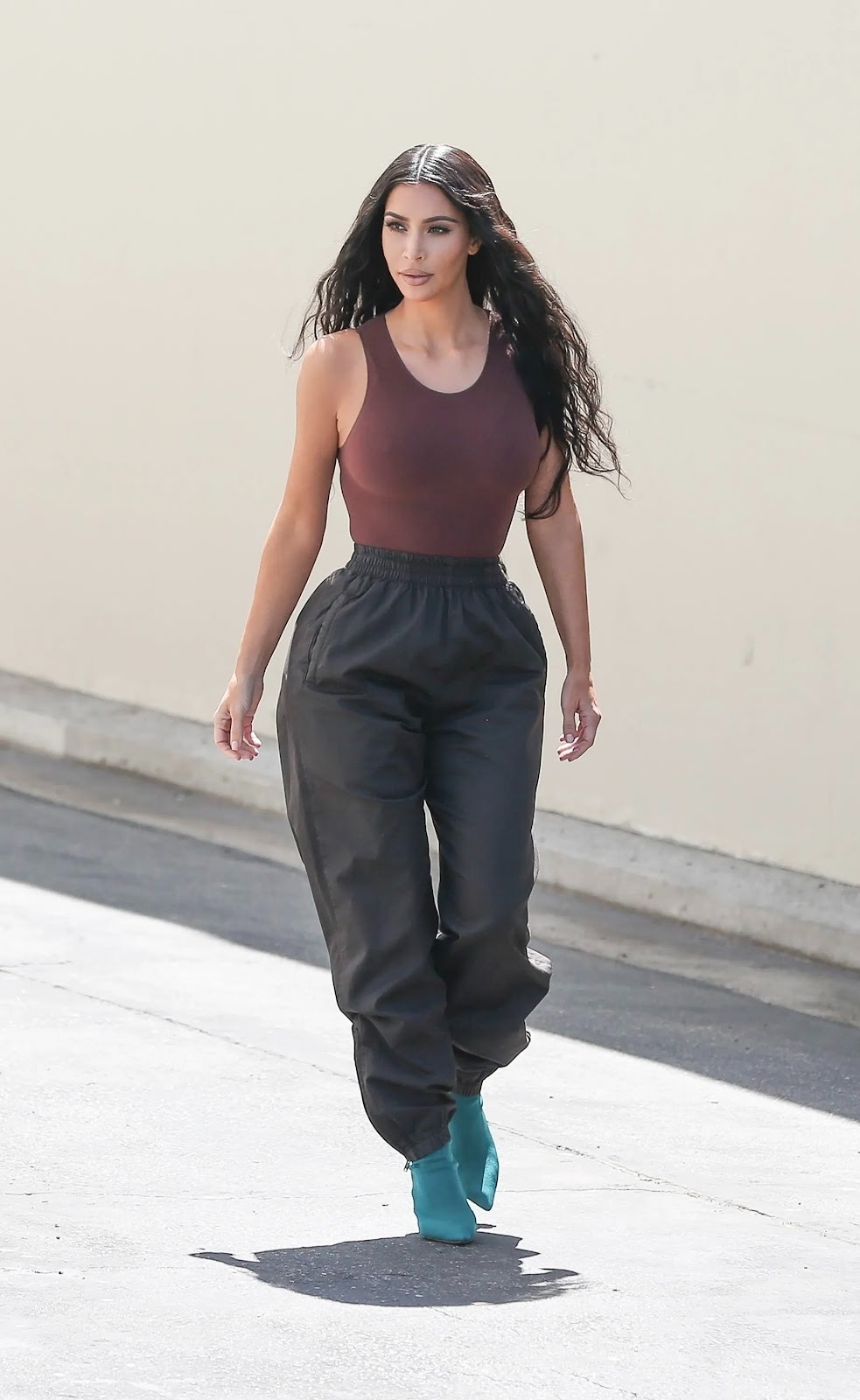
Through the mid-2010s, her style became synonymous with the Yeezy aesthetic. Her look shifted toward minimalism: monochrome sets, leggings, bodysuits, oversized bombers, and chunky sneakers became her new uniform. The palette remained muted—blacks, beiges, and slate greys—yet she continued to celebrate her famous curves. During this period, she became the ultimate marketing tool for the Yeezy brand, effectively turning the streets into her personal runway.
The Skims Empire
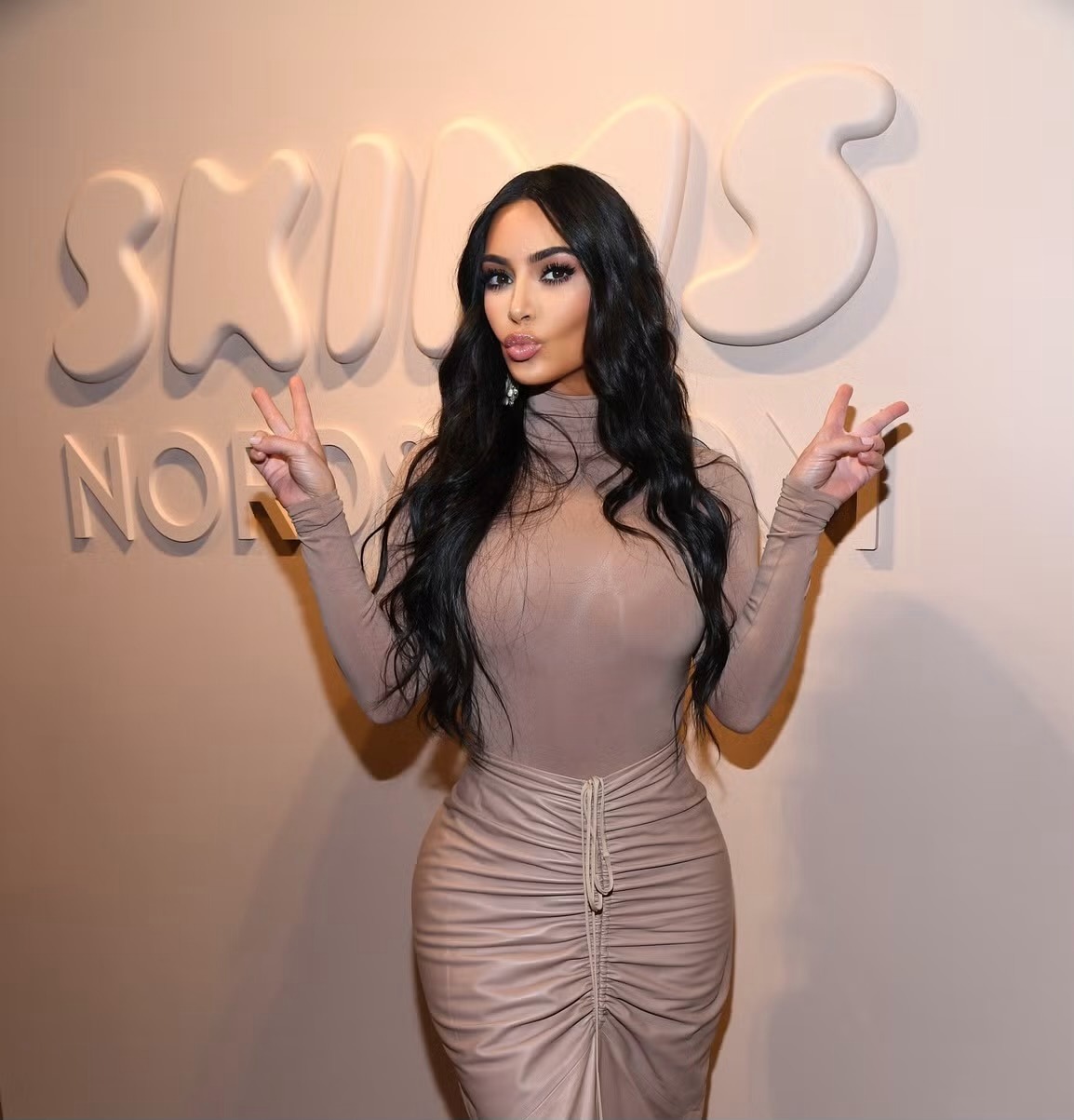
In 2019, Kim Kardashian pivoted from being a muse to a mogul with the launch of Skims, her solutionwear and basics brand. The company was an overnight sensation. Within minutes of its online debut, the site raked in over $2 million in sales. By the end of 2020, annual profits were estimated at $145 million, jumping to $275 million in 2021. By 2023, the brand reached a staggering market valuation of $4 billion.
The success of Skims mirrored a shift in Kim’s personal wardrobe. She leaned even further into minimalist bodysuits, crop tops, and leggings in skin-tone shades, emphasizing a sleek, second-skin aesthetic that celebrated natural forms.
Defining Red Carpet Moments
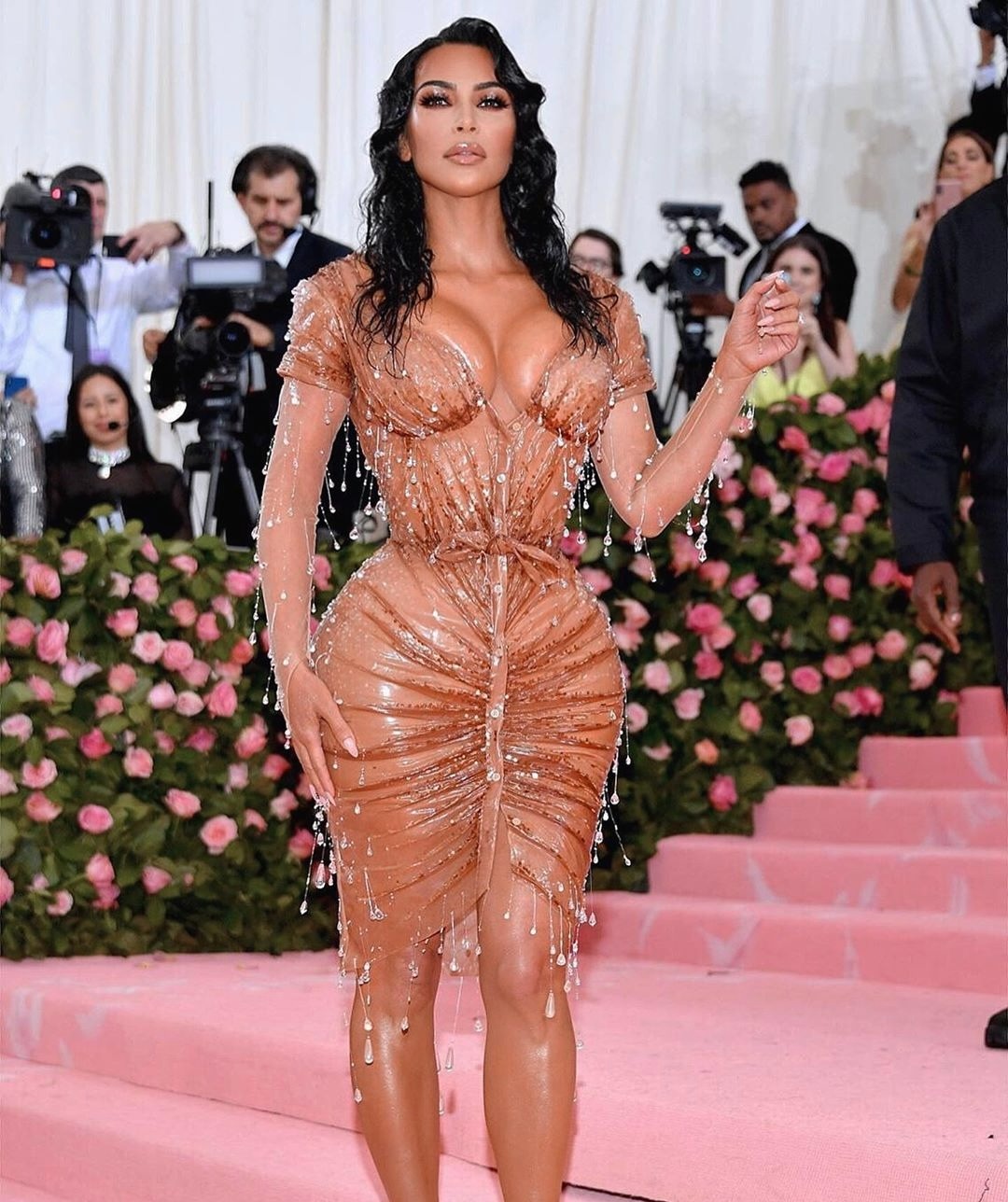
One of Kim’s most iconic looks was her appearance at the 2019 Met Gala. Following the “Camp” theme, she wore a custom “Wet Look” dress by Thierry Mugler. The latex masterpiece, adorned with crystals that looked like glistening water droplets, took months to create and featured an impossibly cinched corset. It was Mugler’s first new design in two decades, making the appearance a historic event for the fashion community.
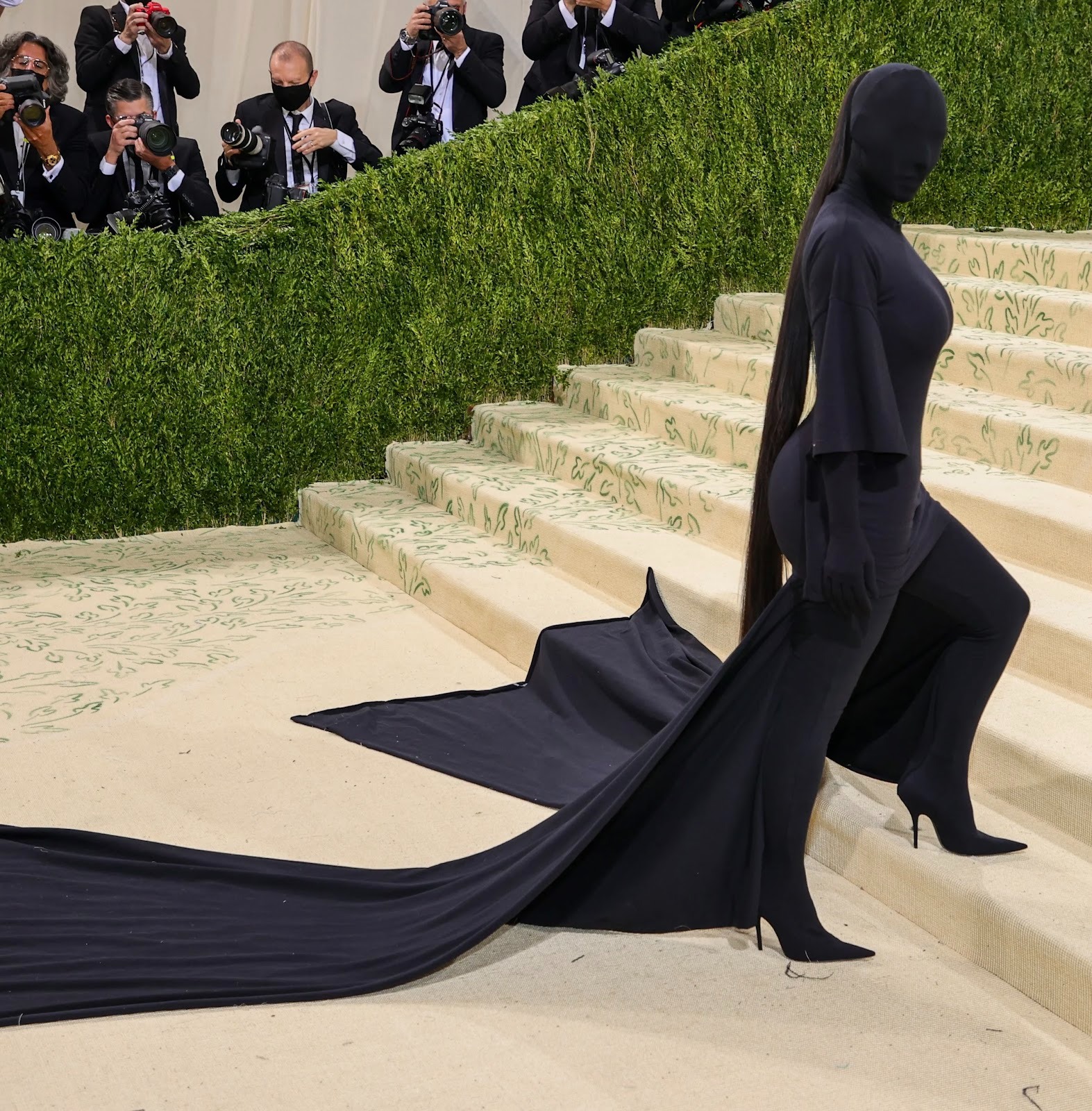
Following her divorce filing from Kanye West in 2021, Kim entered a new stylistic chapter. She began a close creative partnership with Demna Gvasalia and the house of Balenciaga. Her most polarizing moment came at the 2021 Met Gala, where she appeared in an all-black Balenciaga ensemble that completely covered her face. The “faceless” look became an instant cultural touchstone, symbolizing a new era of her fashion identity. During this transition, she also began working with new stylists, most notably Dani Levi.
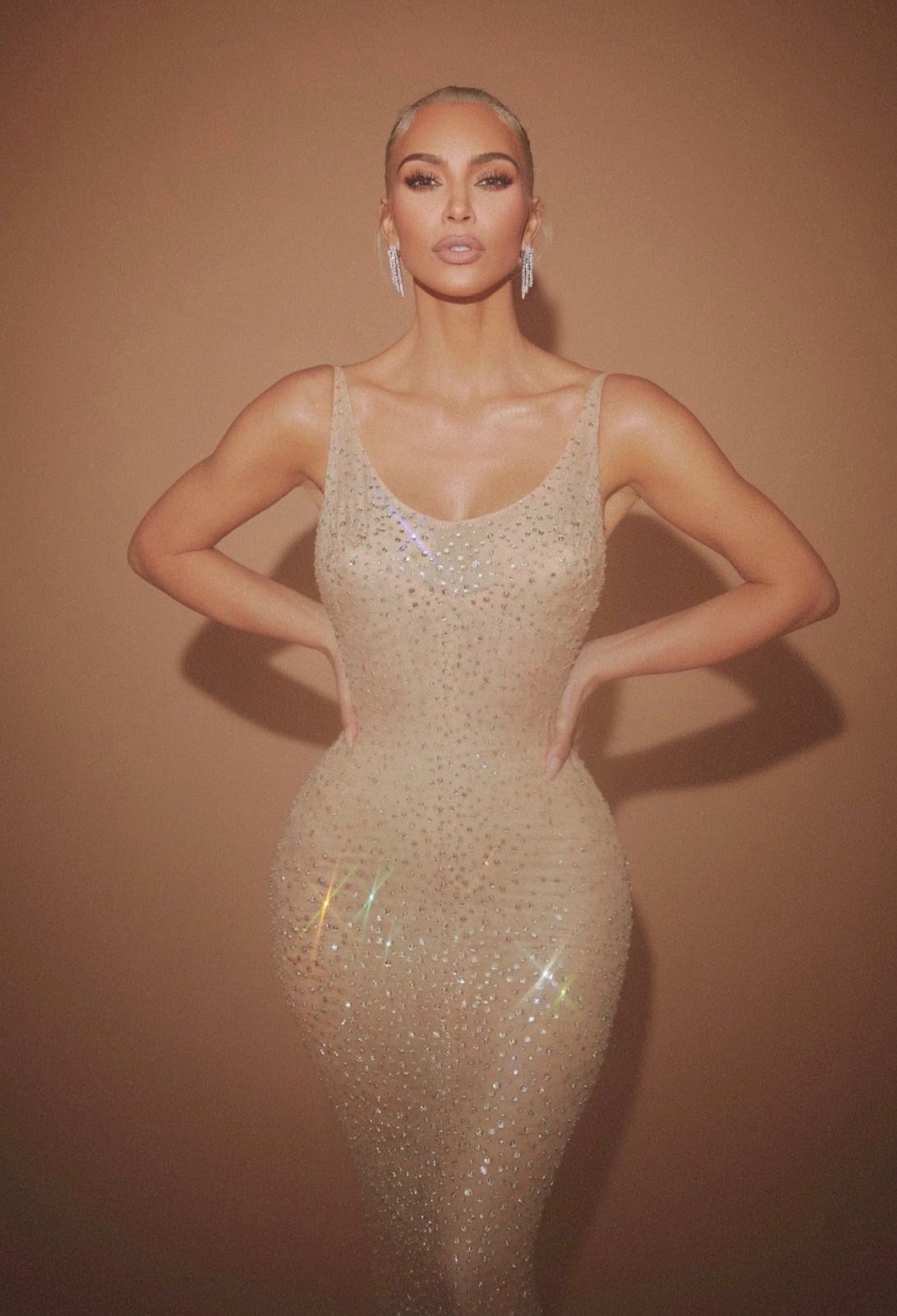
In 2022, Kim once again broke the internet at the Met Gala by wearing the original dress worn by Marilyn Monroe. It was the same gown Monroe wore to serenade President John F. Kennedy with “Happy Birthday, Mr. President” in 1962. Borrowed from Ripley’s Believe It or Not! Museum, the choice was unprecedented and underscored Kim’s connection to Hollywood royalty.
Her recent style serves a mix of minimalism and futurism, such as the silver “second-skin” ensemble she wore to a Balenciaga show. These experimental looks highlight her willingness to play with form and silhouette, proving that her fashion influence is rooted in more than just trends—it’s about conceptual storytelling.
Kim Kardashian’s fashion dominance is the result of a perfect storm: high-level designer collaborations, a keen understanding of media impact, and a massive social media presence. She doesn’t just wear clothes; she creates moments that define the decade’s visual language.
Her journey from the loud glam of the early 2000s to the minimalist powerhouse of today is a testament to the power of personal branding. Kim Kardashian has proven that with enough vision and persistence, a media personality can become a true cultural icon. Today, she isn’t just following the trends—she is the one setting them.